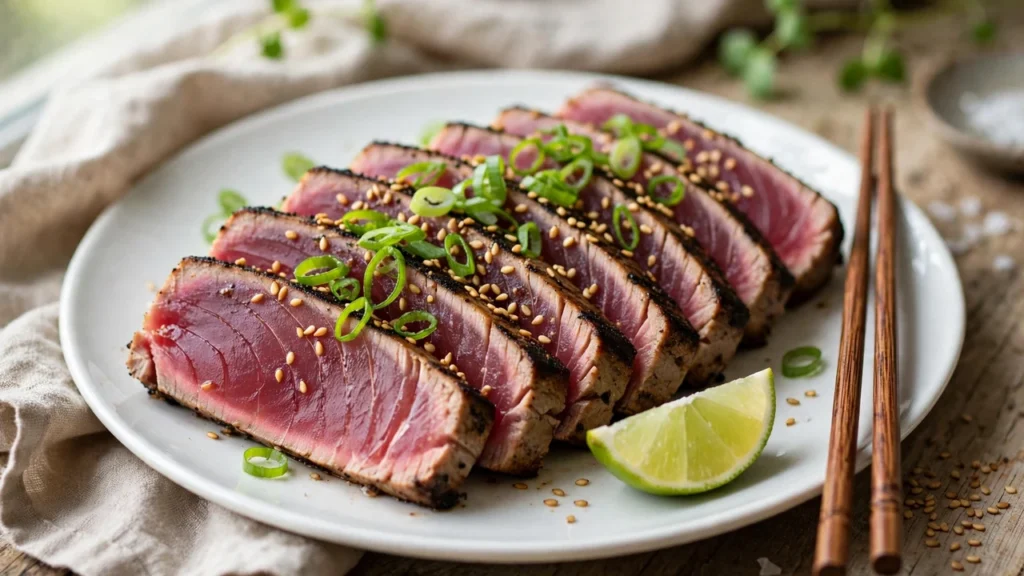
Location: Home kitchen, United States (Bowl of Delicious Six-Minute Seared Ahi Tuna Steaks)
Six-Minute Seared Ahi Tuna Steaks: Ingredients, Steps, Nutrition and Tips
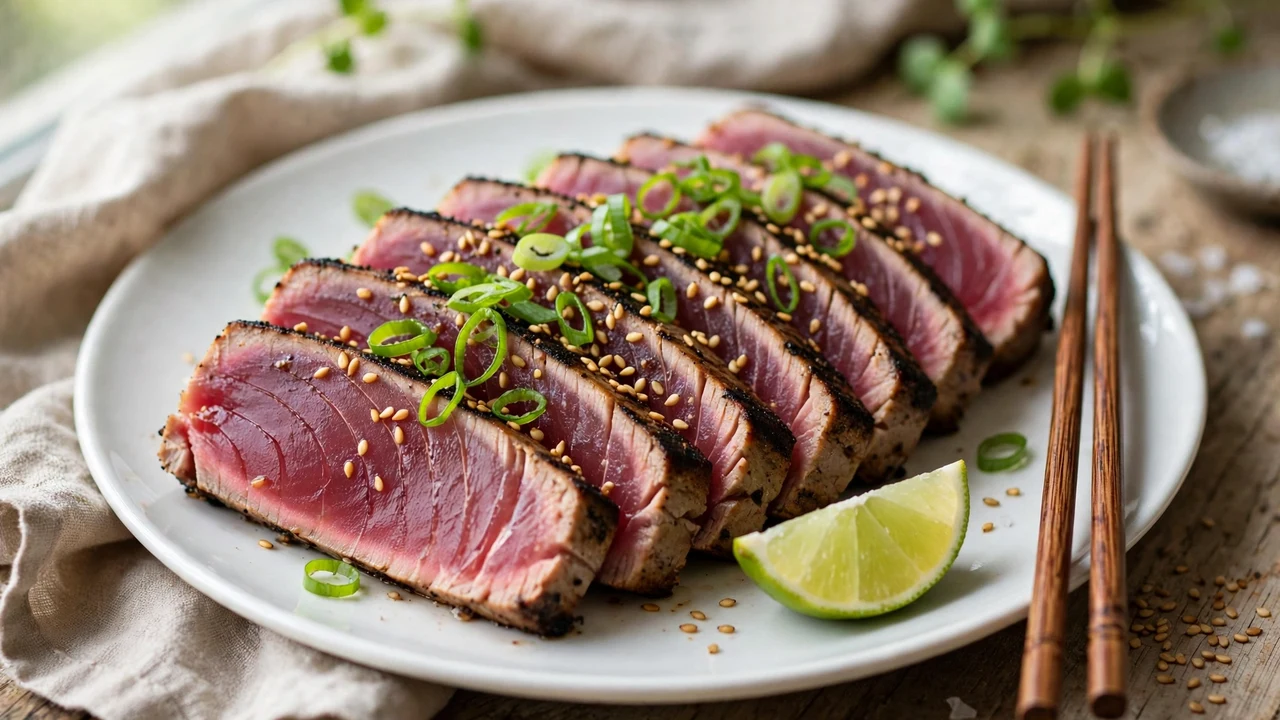
Six-minute seared ahi tuna steaks are the fastest impressive dinner you can make at home. Two tuna steaks, a soy sauce and toasted sesame honey marinade, and a searing hot pan give you a crisp, salty crust and a tender, pink, medium rare center in about six minutes of cooking. This guide follows the Bowl of Delicious recipe, rated 4.96 stars from 2,025 votes, and adds the nutrition figures, cost estimate, storage times, and serving ideas you need before you buy the fish.
Six-Minute Seared Ahi Tuna Steaks at a Glance
| Item | Detail |
| Recipe | Six-Minute Seared Ahi Tuna Steaks, Bowl of Delicious |
| Rating | 4.96 stars from 2,025 votes on the source page |
| Cook time | About 6 minutes: 1 to 1 1/2 minutes per side for medium rare |
| Marinade | Optional, at least 10 minutes, or up to overnight |
| Total time | Under 20 minutes with the marinade, under 10 minutes without it |
| Serves | 2, one 4 ounce steak each |
| Doneness | Medium rare: seared outside, red inside |
| Cost estimate | About $10 to $20 for two 4 ounce steaks, 2026 United States grocery prices, estimate only |
Why We Researched This Recipe
Ahi tuna is one of the quickest proteins to cook, and this recipe is the one readers keep coming back to: it was first published in November 2015, it has been updated since, and it still carries a 4.96 star rating from more than 2,000 votes. We researched it to answer the four questions every cook asks: what do I need, how long does it take, can I make it ahead, and how do I store the leftovers. We also checked the raw fish safety notes carefully, because this dish is served medium rare, and the source page is clear about the risk and about buying sushi grade fish.
What You Need and What It Costs
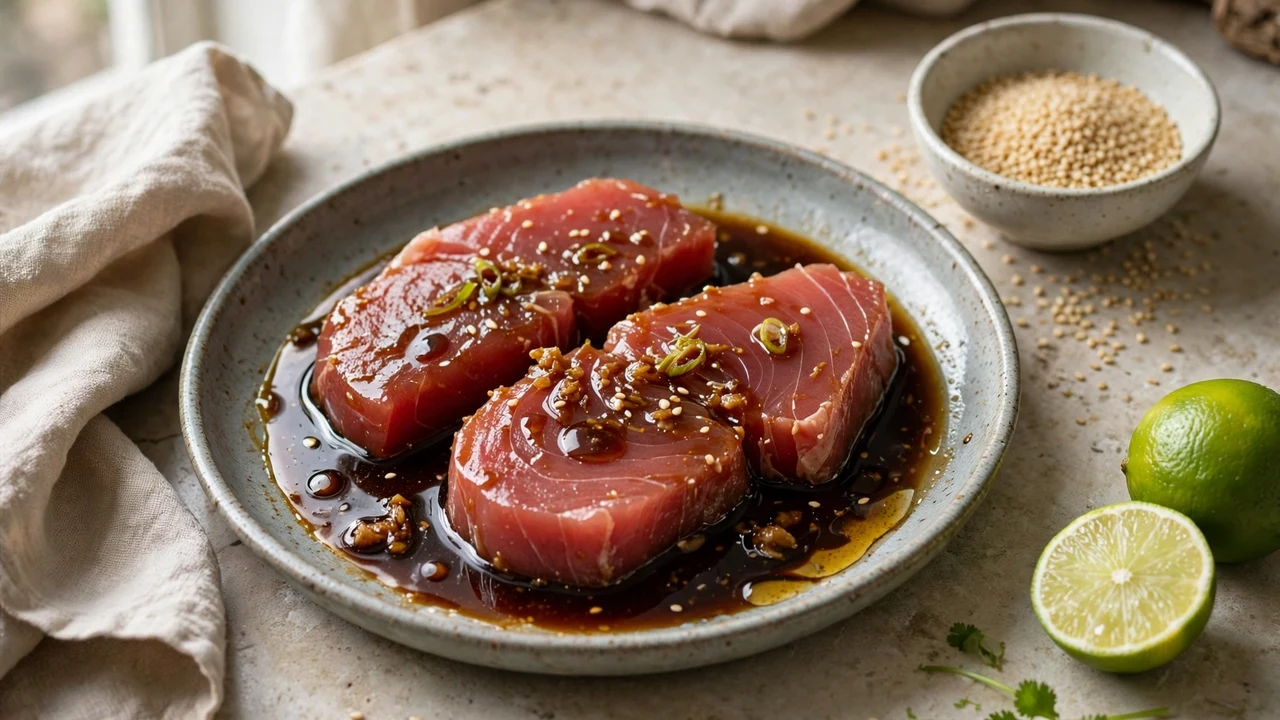
The recipe needs two tuna steaks and six marinade and cooking items, most of them pantry staples. Prices below are 2026 United States grocery estimates, not a quote from any one store, and they vary by region and by whether the tuna is fresh or frozen. The recipe author bought her steaks for $5 for two, or $2.50 each, but that was the price in the original 2015 post, not a current price.
| Ingredient | Amount | 2026 estimate |
| Ahi tuna steaks, yellowfin or bigeye | 2 steaks, about 4 ounces each, 1 inch thick | About $10 to $20 |
| Soy sauce, low sodium preferred | 2 tablespoons | Pantry item |
| Toasted sesame oil | 1 tablespoon | Pantry item |
| Honey | 1 tablespoon | Pantry item |
| Kosher salt, optional | 1/2 teaspoon | Pantry item |
| Black pepper | 1/4 teaspoon, to taste | Pantry item |
| Cayenne pepper, optional | 1/4 teaspoon | Pantry item |
| High heat cooking oil | 1 tablespoon, canola, olive, or other | Pantry item |
| Green onions, toasted sesame seeds, lime wedges | For serving, optional | About $1 to $2 |
| Total | 2 servings | About $11 to $22 |
Our Food Review
This is a restaurant style dish with almost no work. The outside gets a dark, salty, savory crust from the soy and honey marinade hitting a searing hot pan, and the inside stays supple, soft, and tender, pink all the way through. The recipe author compares it to a beef steak, and the comparison holds: it slices the same way, it eats the same way, and it looks the same on the plate. The toasted sesame oil and honey give the marinade an umami sweetness that plain soy sauce alone does not reach, and the squeeze of lime and the green onions at the end keep it bright.
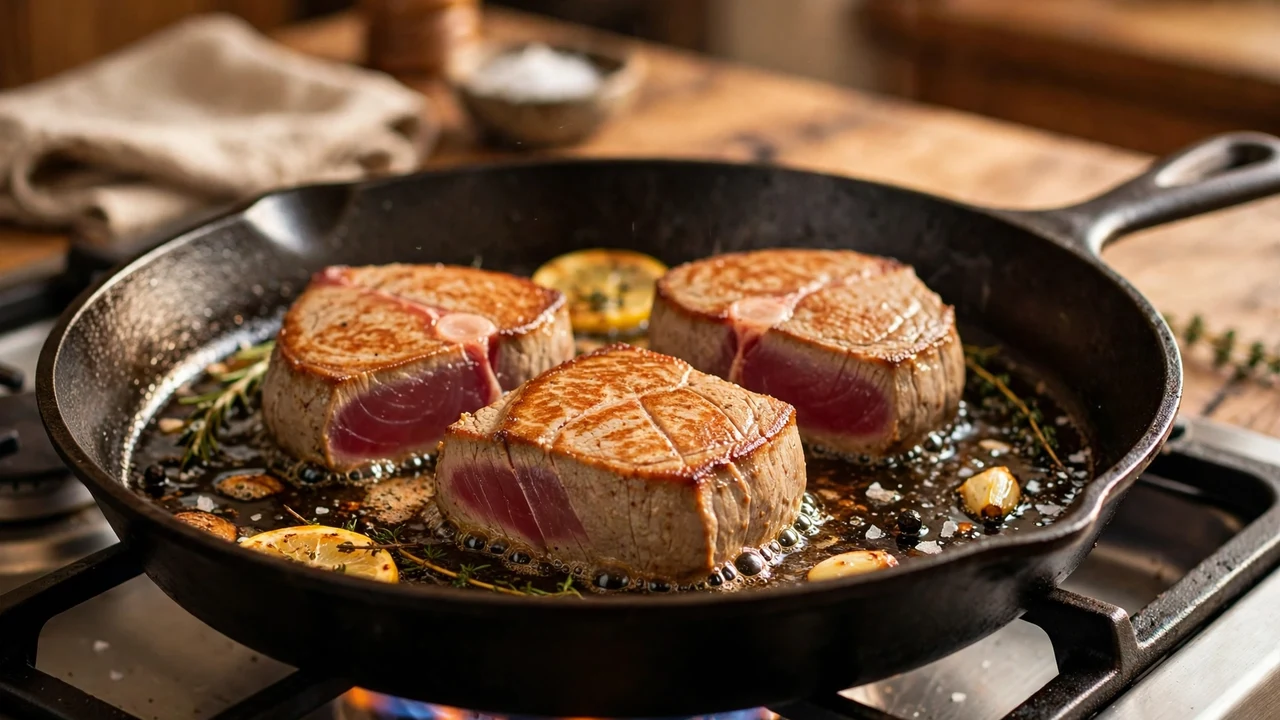
The one thing that matters is the pan. It must be searing hot before the fish goes in, because the whole trick is a fast crust with a raw center. Use a nonstick skillet, or a very well seasoned cast iron skillet, and heat cast iron for 3 to 5 minutes first. Fish sticks easily, and a stuck crust ruins the dish. Pat the steaks dry before they go in, because a dry surface sears and a wet surface steams.
With Rice and Green Beans
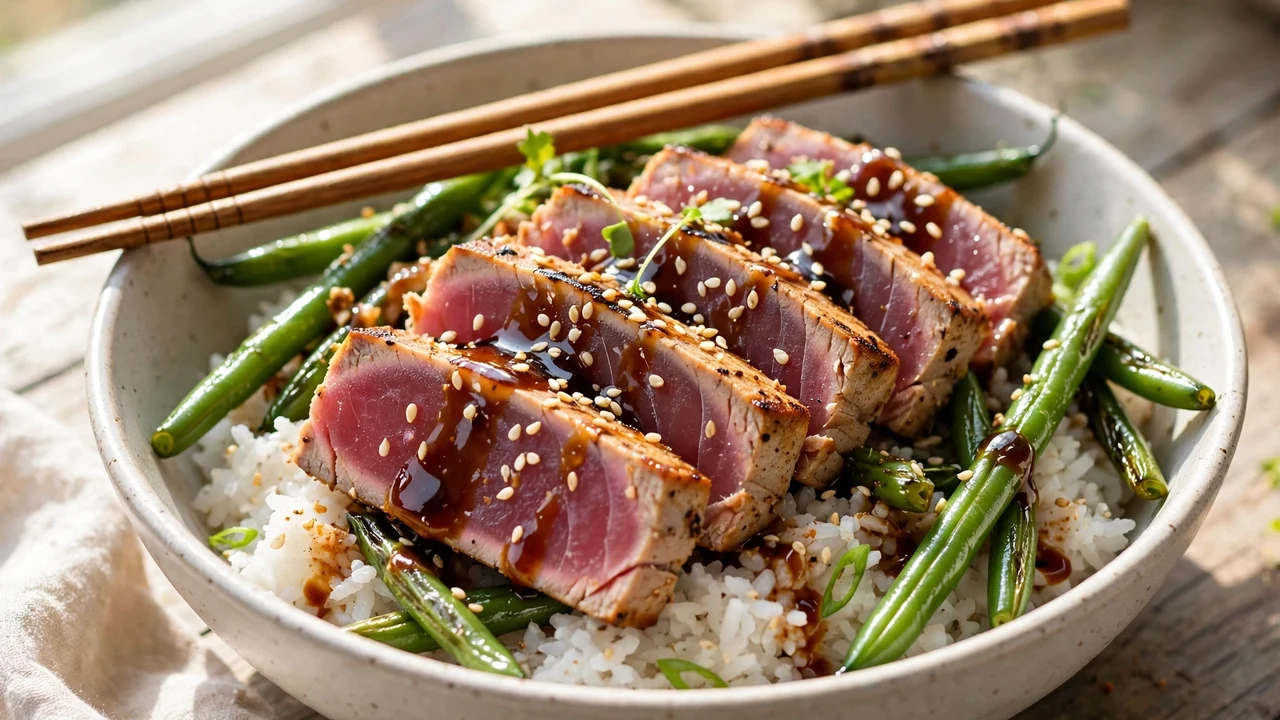
This is the serving the recipe author likes best. Slice the tuna and lay it over a bowl of rice with green beans or broccoli, and drizzle a little spicy mayo or the reserved marinade over the top. The rice catches the juices, the green beans add crunch, and the whole bowl eats like a sushi restaurant rice bowl at home.
Over Greens, Low Carb
For a lighter, low carb meal, serve the sliced tuna on a bed of greens with an Asian style dressing. Any store bought dressing with soy, sesame, or ginger works, and the recipe author suggests her homemade sesame miso dressing. The warm tuna wilts the greens just slightly, and the dressing ties the plate together.
In a Poke Bowl or on Avocado Toast
Cut the seared tuna into cubes and it works in a poke bowl, even though poke is usually raw fish. Sear it a little less than normal so the cubes stay rare inside. It is also very good sliced over avocado toast, where the creamy avocado plays against the salty seared crust.
Picky Eats
For eaters who are nervous about raw fish, cook the steaks longer: 2 to 2 1/2 minutes per side gives medium well to well, and the fish is still good, just drier. The recipe author is clear that there is always a risk with raw or undercooked seafood, and she recommends sushi grade tuna, which has been frozen at a temperature that kills parasites. Do not serve raw or undercooked fish to anyone who is pregnant or has a medical reason to avoid it, and talk to a physician if you are concerned. For a gluten free version, use gluten free soy sauce, or liquid aminos for a paleo or Whole30 version. For a milder marinade, leave out the cayenne.
Parents Review and Family Tips
This is a fast weeknight dinner, but it is an adults first dish, because the tuna is served medium rare and the marinade is salty and a little spicy. Cook a second steak well done for kids who want theirs cooked through, and serve their slices with rice and a sauce they like, such as spicy mayo. Buy the fish the day you cook it, or thaw frozen steaks in the fridge for 24 hours before cooking, and pat them dry. Let kids sprinkle the sesame seeds and squeeze the lime, and slice the tuna at the table so everyone sees the pink center before they eat.
Nutrition and Carbohydrate Information
The figures below come from the recipe page itself, which publishes a nutrition panel calculated by an automatic API for one serving, and states that the figures are its best estimate. The panel does not include any added sodium from seasoning to taste, any optional ingredients, or brand differences.
| Per serving | Amount |
| Calories | 331 kcal |
| Protein | 28 g |
| Carbohydrates | 10 g |
| Dietary fiber | 1 g |
| Sugars | 9 g |
| Total fat | 20 g |
| Saturated fat | 3 g |
| Cholesterol | 43 mg |
| Sodium | 1632 mg |
| Potassium | 324 mg |
| Vitamin A | 2580 IU |
| Calcium | 9 mg |
| Iron | 2 mg |
Source and method: Bowl of Delicious published nutrition panel for Six-Minute Seared Ahi Tuna Steaks, per serving, calculated by an automatic API from the listed ingredients. The sodium is high, 1,632 mg, because of the soy sauce marinade, so use low sodium soy sauce and skip the added kosher salt if sodium matters to you. The recipe author notes that many readers found the dish too salty, and she made the added salt optional for that reason. Ahi tuna is high in omega 3s and vitamin B12, and the fish itself is lean; most of the fat in the panel comes from the sesame oil and the searing oil.
What to Know Before You Make It
- Buy sushi grade ahi tuna if you plan to serve it medium rare. It has been frozen at a temperature that kills parasites.
- Thaw frozen steaks fully before cooking: take them out of the vacuum sealed plastic, put them on a plate covered in plastic wrap, and refrigerate for 24 hours.
- Pat the steaks dry with a paper towel before marinating and again before searing. A dry surface sears, a wet surface steams.
- Marinating is optional. Ten minutes is enough, or leave it overnight in the refrigerator. Reserve a spoonful or two of marinade before coating the fish if you want to drizzle it over the finished dish.
- Heat the pan until it is searing hot: 3 to 5 minutes for cast iron, about 1 minute for nonstick. Different burners run hotter, so use your judgement, because the honey in the marinade can burn if the heat is too high.
- Sear 1 to 1 1/2 minutes per side for medium rare, 2 to 2 1/2 minutes for medium well to well, and 30 seconds per side for very rare. Thinner steaks need less time, thicker steaks need more.
- Slice into 1/2 inch slices right away. Resting too long lets carryover cooking take the center further than medium rare.
- If the dish tastes too salty, skip the added kosher salt next time, use low sodium soy sauce, and season with flaky sea salt at the table instead.
Is It Worth Making
Yes, if you like rare fish. For about $15 and under 20 minutes you get a dish that tastes like a sushi restaurant appetizer, with a 4.96 star rating from more than 2,000 readers behind it. The only real risks are overcooking it and under seasoning it, so watch the clock, keep the pan hot, and taste the marinade before it goes on the fish. If raw fish is not for you, cook it through, and it is still a good quick dinner, just a drier one.
Frequently Asked Questions
What ingredients do I need for seared ahi tuna steaks?
Two ahi tuna steaks, about 4 ounces each and 1 inch thick, plus 2 tablespoons of soy sauce, 1 tablespoon of toasted sesame oil, 1 tablespoon of honey, 1/2 teaspoon of kosher salt if you want it, 1/4 teaspoon of black pepper, 1/4 teaspoon of cayenne if you want heat, and 1 tablespoon of high heat oil for searing. Green onions, toasted sesame seeds, and lime wedges are for serving.
How long do seared ahi tuna steaks take to make?
About 6 minutes of cooking: 1 to 1 1/2 minutes per side for medium rare. With an optional marinade of at least 10 minutes, the whole dish is under 20 minutes, and without marinating it is under 10 minutes.
Can I make seared ahi tuna steaks ahead of time?
You can marinate the steaks ahead of time, up to overnight in the refrigerator, but cook them just before serving. Searing takes six minutes, and the dish is best eaten fresh, sliced right after it leaves the pan.
How do I store leftovers from seared ahi tuna steaks?
Refrigerate leftover cooked tuna promptly in a covered container and eat it within 1 day. Do not reheat it, because reheating dries it out and takes it past medium rare. This is general food safety guidance for cooked fish, not a time printed on the recipe page, which gives no storage guidance. Do not freeze cooked seared tuna, because the texture suffers.
Is it safe to eat raw ahi tuna?
There is always a risk with raw or undercooked seafood. The recipe author recommends sushi grade ahi tuna, which has been frozen at a temperature that kills parasites, and notes that tuna and salmon are among the fish least likely to carry parasites. Do not eat it raw or undercooked if you are pregnant or have a medical reason to avoid it, and talk to a physician if you are concerned.
How many calories are in seared ahi tuna steaks?
331 calories per serving, according to the recipe page’s own published nutrition panel, with 28 grams of protein, 10 grams of carbs, and 20 grams of fat. The panel is the source’s best estimate from an automatic calculator, and it does not include optional ingredients or extra salt added at the table.
Related Food Guides
- Chili Recipe: Easy Homemade Chili, Ingredients, Steps, Nutrition and Tips
- Wendy’s Menu: Prices, Calories and Full Guide (2026)
- Soy Sauce: Types, When to Use What, Substitutes and Nutrition
- The BEST Easy Fried Rice Recipe (Ready in 15 Minutes!) Full Guide
- Classic Pico de Gallo Recipe: Ingredients, Steps, Nutrition and Tips
- Great Roasted Carrots: Easy Recipe, Ingredients, Steps and Nutrition
Sources and Review Notes
Sources: Bowl of Delicious, Six-Minute Seared Ahi Tuna Steaks, first published November 2015, updated February 23, 2026, 4.96 stars from 2,025 votes, https://www.bowlofdelicious.com/six-minute-seared-ahi-tuna-steaks/. Nutrition: the recipe page’s own published panel, calculated by an automatic API. What was researched: the full recipe text, ingredients, steps, times, yield, rating, publication dates, and safety notes from the source page. Nothing was invented. Prices are labeled 2026 grocery estimates, and the author’s $5 example price is from the original 2015 post, labeled as such. The recipe page gives no storage guidance, so the storage answer is labeled as general food safety guidance for cooked fish.