Location: United States
How To Fix Slow Cooker Recipes: 7 Common Problems and Easy Fixes
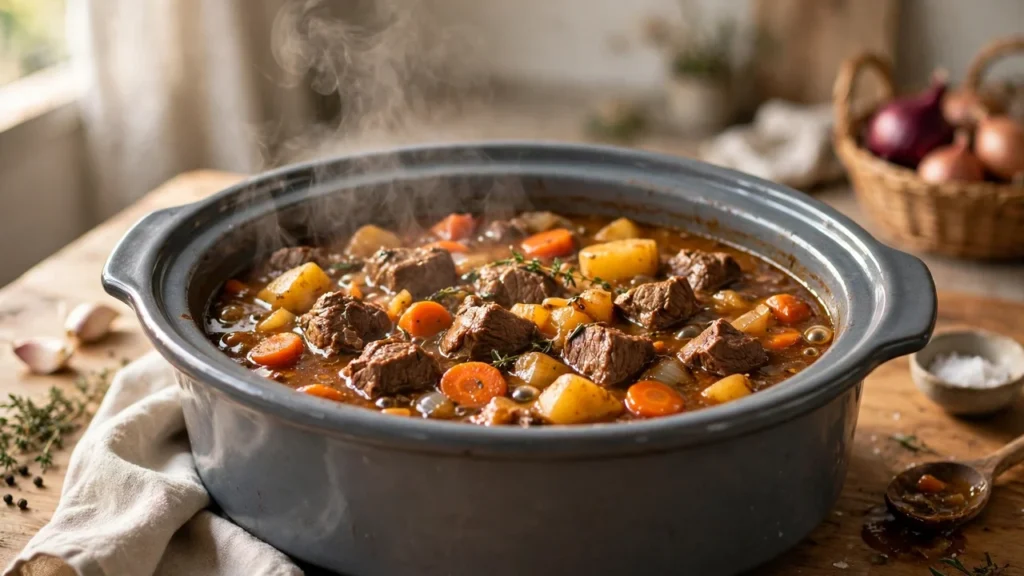
Most slow cooker problems come from the same cause: a slow cooker keeps steam in, so very little liquid escapes, and food cooks gently for hours. That is why a stew can turn watery, why vegetables can turn mushy, and why dairy can curdle. The good news is that most of these problems have a simple fix, and many can be fixed while the food is still in the pot. This guide covers 7 common problems, what causes each one, and the fix to use next time, plus food safety notes to keep in mind.
Guide at a Glance
| Topic | How to fix slow cooker recipes |
| Problems covered | Watery sauce, bland flavor, mushy vegetables, dry or tough meat, curdled dairy, undercooked food, food left too long on Warm |
| Fill level | About one half to two thirds full, per food safety guidance |
| Key rule | Keep the lid closed during cooking, and add delicate foods near the end |
| Good to Know | Researched guide, no prices or nutrition figures, because this is a cooking method guide, not a recipe or a menu |
Why We Researched Slow Cooker Fixes
Slow cooker recipes look simple: add the ingredients, close the lid, and wait. In practice, readers report the same disappointments again and again, a watery sauce, bland flavor, mushy vegetables, and meat that is dry even though it cooked in liquid. We went through published slow cooker guidance to find the cause behind each problem and the fix that works, so you can rescue the meal in front of you and cook it better next time. Where guidance differs, for example on exact dairy timing, we say so and give the range.
The 7 Fixes at a Glance
| Problem | Main cause | Quick fix |
|---|---|---|
| Watery sauce | Too much liquid, steam stays in | Use less liquid, finish uncovered, thicken at the end |
| Bland flavor | No browning, flavor diluted by liquid | Brown meat first, season at the end, add acid or fresh herbs |
| Mushy vegetables | Delicate vegetables added too early | Add them in the last 30 to 60 minutes |
| Dry or tough meat | Wrong cut, or cooked too long or too short | Use marbled cuts, check timing, shred dry meat into sauce |
| Curdled dairy | Dairy added too early | Add dairy in the last 15 to 30 minutes |
| Undercooked food | Overfilled pot, frozen meat, lid opened often | Fill half to two thirds, thaw meat, keep the lid closed |
| Food held too long on Warm | Warm is for holding, not cooking | Serve within a couple of hours, do not cook on Warm |
Our Review of These Fixes
We did not test every fix in our own kitchen, so this review reflects what the published guidance agrees on. The fixes that show up everywhere are the liquid fix, the lid fix, and the timing fix for dairy and delicate vegetables. Those three alone solve most slow cooker disappointments. The honest limits: every slow cooker runs a little differently, so a time that works in one pot can overcook in another, and a fix applied at the end, like thickening a sauce, cannot undo meat that has already dried out. Use the first cook of a new recipe as a calibration run, and check the food earlier than the recipe says.
Fix 1: Watery sauce
A slow cooker lid traps steam, so very little liquid evaporates. Meat, onions, mushrooms, and tomatoes also release moisture as they cook. If you add the same amount of broth as a stovetop recipe, you often get soup instead of stew. To fix a watery sauce now, take the lid off for the last 30 to 60 minutes so the sauce can reduce, or stir in a cornstarch slurry (1 tablespoon cornstarch mixed with 2 tablespoons cold water) near the end. Next time, start with less liquid: many guides suggest about 1/2 to 1 cup for 3 to 4 pounds of chicken, or cutting the stovetop amount by about a third to a half, and draining canned tomatoes and frozen vegetables before they go in. Pat meat and vegetables dry, brown the meat first, and keep the pot below the three quarter mark.
Fix 2: Bland flavor
Long, gentle cooking and extra liquid can dull flavor. Browning meat in a hot pan before it goes into the pot adds flavor that slow cooking alone cannot create, and sauteing onions and garlic in the same pan helps too. Season more assertively than you think you need to, and taste and adjust at the end, when the flavors have settled. A squeeze of lemon juice or a splash of vinegar right before serving brightens a rich stew, and fresh herbs stirred in at the end add color and freshness. Add dried herbs and spices early, and fresh herbs late, so the fresh ones do not lose their flavor over hours of cooking.
Fix 3: Mushy vegetables
Not all vegetables cook at the same speed. Hard root vegetables like potatoes and carrots need the longest time, so put them at the bottom of the pot, closest to the heat, with the meat on top. Delicate vegetables like peas, zucchini, spinach, and leafy greens turn soft and dull if they cook for hours, so add them in the last 30 to 60 minutes. Pasta and rice follow the same rule: add pasta in the last 20 to 30 minutes, or cook rice and pasta separately and stir them in at the end, or they absorb liquid and turn gummy.
Fix 4: Dry or tough meat
Dry meat and tough meat are opposite problems with different fixes, so check which one you have. Dry, stringy meat is usually overcooked lean meat: chicken breast and pork loin dry out fast, while chicken thighs, chuck roast, and pork shoulder stay moist because they have more fat and connective tissue. If the meat is dry, shred it into the sauce and add a little broth to help it. Tough meat that will not shred is usually undercooked for its cut: tough cuts need the full low and slow time for the connective tissue to break down, so give them more time on Low. As a guide, chicken breast takes about 3 to 4 hours on Low, chicken thighs 4 to 6 hours, and beef chuck roast or pork shoulder 8 to 10 hours, but check your own pot, because models differ.
Fix 5: Curdled dairy
Milk, cream, sour cream, yogurt, and soft cheese can curdle or separate when they cook for hours at slow cooker temperatures. The fix is timing: stir dairy in during the last 15 to 30 minutes of cooking, on Low, just long enough to warm through and melt. Full fat dairy resists curdling better than low fat dairy, and tempering helps: mix a ladle of hot liquid into the dairy first, then stir it back into the pot. If the sauce has already split, it is hard to bring back smoothly, so next time keep the dairy out until the end.
Fix 6: Undercooked food
Undercooked food usually comes from one of three causes: the pot was too full, the meat went in frozen, or the lid was lifted too often. Keep the pot about one half to two thirds full, so heat can reach the food evenly. Thaw meat before it goes in, because frozen meat can stay too long at unsafe temperatures. Keep the lid closed: each lift lets heat escape, and one guide puts the cost at about 20 minutes of extra cooking time per lift. If the food is undercooked at the end of the stated time, keep cooking on Low and check again, rather than turning the heat up and hoping.
Fix 7: Food held too long on Warm, and using High for everything
The Warm setting is for holding food that is already cooked, not for cooking raw food. Food safety guidance says the Warm setting should only be used after food has reached safe internal temperatures. Holding food on Warm for hours can still dry out meat and turn vegetables mushy, so serve within a couple of hours. The High setting has the same caution: one hour on High is roughly two hours on Low, but cooking everything on High can boil the meat and give a tougher texture. Use High for the first hour to get the pot up to temperature if you like, then switch to Low, and use Low for tough cuts like roasts.
Picky Eats: For the Fussy Eater
Slow cooker food suits picky eaters when it is kept simple. Shredded meat in a mild sauce, soft potatoes and carrots, and plain rice on the side are easy to serve in separate piles, so each person can take what they like. If a sauce has turned too strong or too thin for a fussy eater, serve the meat and vegetables with a spoonful of sauce on the side instead of mixed through. Keep strong flavors, like a lot of chili or vinegar, out of the main pot and add them at the table, so one pot can serve the whole family.
Parents’ Review & Family Tips
From a family kitchen view, the slow cooker earns its place when the fixes above become habits: less liquid, the lid kept closed, and delicate foods added late. Family tips: fill the pot half to two thirds full, and do not start a new recipe on a day when nobody will be home to check it near the end. Let older children help with measuring and stirring in the last 30 minutes, and keep younger children away from the hot pot and the steam when the lid comes off. Cook rice or pasta separately on busy nights, so a watery sauce does not also mean a gummy side dish. Leftovers should be cooled and refrigerated promptly, and reheated until steaming hot.
Food Safety & Timing Notes
Source and method: the notes below come from published food safety guidance (FoodSafety.gov on fill level, and USDA guidance on the Warm setting) and from published slow cooker guides. They are general guidance, not a substitute for your slow cooker manual, which takes priority for your model. No nutrition figures are given in this guide, because this is a cooking method guide, not a recipe.
| Item | Guidance |
|---|---|
| Fill level | About one half to two thirds full |
| Frozen meat | Thaw before cooking, do not cook from frozen |
| Warm setting | Hold cooked food only, do not cook raw food on Warm |
| Lid lifts | Each lift adds cooking time, about 20 minutes per lift in one guide |
| Dairy | Add in the last 15 to 30 minutes |
| Delicate vegetables | Add in the last 30 to 60 minutes |
| Uncooked dried red kidney beans | Do not use uncooked, soak and boil hard first, canned beans are fine |
What to Know Before You Start
- Read your slow cooker manual first: fill level and timing guidance can vary by model.
- Start with less liquid than a stovetop recipe uses, and drain canned and frozen ingredients.
- Put hard vegetables at the bottom, meat on top, and delicate foods in last.
- Keep the lid closed, and check the food earlier than the recipe says on a first cook in a new pot.
- Do not use the Warm setting to cook raw food, and do not leave cooked food sitting for hours.
Is It Worth Fixing, or Should You Start Over?
Most slow cooker problems are worth fixing. A watery sauce can be reduced or thickened, bland flavor can be lifted with salt, acid, and fresh herbs, and mushy vegetables can be rescued by serving the meat and sauce over fresh rice or pasta. Start over only when food safety is in doubt: if meat went in frozen, if the pot was overfilled and the food may not have cooked through, or if cooked food sat too long at serving temperature. When in doubt, throw it out. For everything else, the fixes in this guide will save the meal and make the next one better.
FAQ
Why is my slow cooker food watery?
The lid traps steam, so very little liquid evaporates, and meat and vegetables release moisture as they cook. Use less liquid next time, drain canned and frozen ingredients, and finish with the lid off for the last 30 to 60 minutes, or thicken with a cornstarch slurry at the end.
How do I fix bland slow cooker food?
Brown the meat and saute the onions first, season at the end after tasting, and add a squeeze of lemon juice or a splash of vinegar plus fresh herbs right before serving.
When should I add vegetables and dairy to a slow cooker?
Put hard root vegetables at the bottom at the start. Add delicate vegetables in the last 30 to 60 minutes, and add dairy in the last 15 to 30 minutes, so the vegetables stay firm and the dairy does not curdle.
Can I cook frozen meat in a slow cooker?
No. Food safety experts advise thawing meat first, because frozen meat can stay too long at unsafe temperatures in a slow cooker. Thaw it in the refrigerator before it goes in.
How full should a slow cooker be?
About one half to two thirds full, per food safety guidance. Too full, and the food may not cook through. Too empty, and it can overcook or scorch. Check your manual, because guidance can vary by model.
Related Food Guides
- Banana Bread Recipe: Ingredients, Steps, Nutrition & Tips (With Video)
- What Ingredients Do I Need for Banana Bread Recipe?
- New York Food Map Easy Recipe, Ingredients, Steps & Nutrition
- Taco Bell Menu Prices, Calories, Recipe & Full Guide (2026)
- Easy Crème Brûlée Recipe (6 Ingredients) Baking Ingredients, Steps, Nutrition & Tips
- Applebee’s Happy Hour 2026: Prices, Calories, Recipe & Full Guide
Sources & Review Notes
- Slow cooker fix guidance: published guides on watery sauce, bland flavor, mushy vegetables, dairy timing, and lid use, researched October 27, 2026, including A Grateful Kitchen, Slow Cooking: A Glossary of Common Mistakes, Designbeep, How to Fix Slow Cooker Recipes, and It Is Not About Nutrition, 7 Slow Cooker Mistakes That Quietly Ruin Dinner.
- Food safety guidance: FoodSafety.gov fill level guidance (about one half to two thirds full) and USDA guidance that the Keep Warm setting should only be used after food has reached safe internal temperatures, as reported in the guides above.
- No Buffalo Wild Wings source is cited, because the plan listed that chain homepage as the source for this topic and it has nothing to do with slow cooker fixes. No prices or nutrition figures are given, because this is a cooking method guide.
- We did not test every fix in our own kitchen. Times and amounts are ranges from the guides above, and your slow cooker model may differ, so check food earlier than the recipe says on a first cook.