Recipe: Desserts, Baking, Dinner Party, Gluten-Free, Make-Ahead
Easy Crème Brûlée Recipe (6 Ingredients) Baking Ingredients, Steps, Nutrition & Tips (Main)
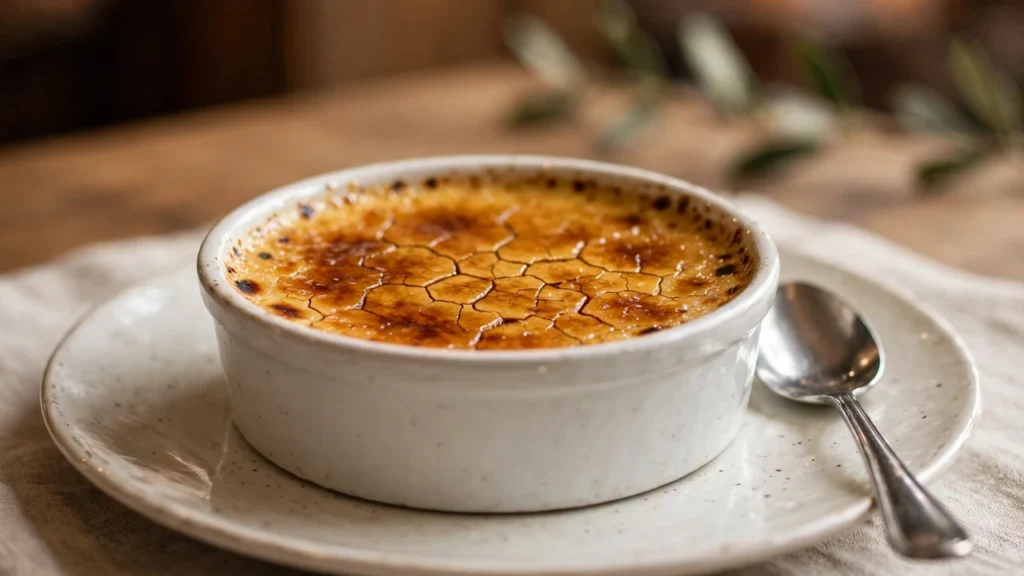
Crème brûlée sounds like a restaurant dessert, but this version needs only 6 ingredients, one saucepan, and a baking pan, and the official page calls it one of the easiest desserts to make. The custard is whisked, strained if needed, baked in a water bath, chilled until set, and finished with a sugar crust torched at the table. The full timeline is about 5 hours, but only about 15 minutes of that is hands-on work. This main guide gives the complete recipe: the exact ingredients, every step, the doneness test, the make-ahead windows, the substitutions the page itself tested, and the nutrition estimates, with links to the four single-topic guides in the series for ingredients, timing, make-ahead, and leftovers.
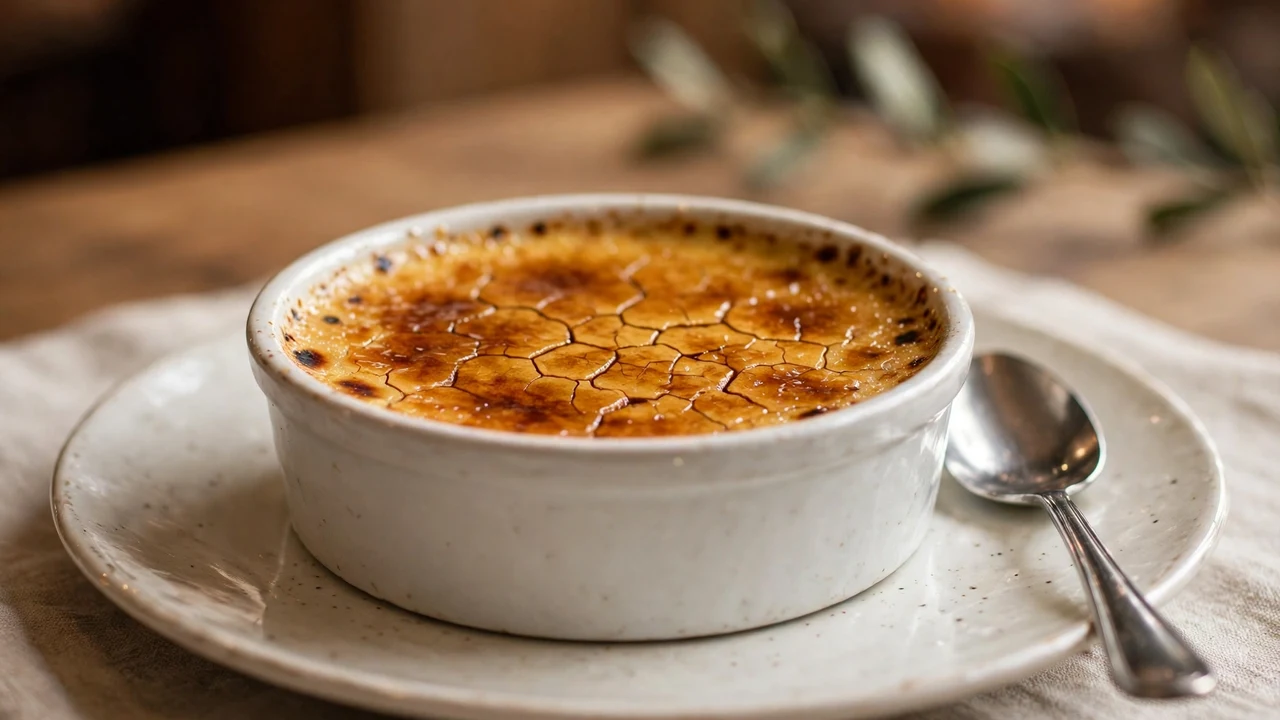
Recipe at a Glance
| Recipe | Easy Crème Brûlée Recipe (6 Ingredients) |
| Ingredients | 6: egg yolks, granulated sugar, heavy cream, espresso powder, salt, vanilla extract |
| Oven | 325°F (163°C) |
| Bake time | About 35 minutes, checking from 30 minutes |
| Doneness | Edges set, centers jiggly like jello; thermometer 170°F (77°C) |
| Cooling | At least 1 hour on a wire rack |
| Chilling | At least 4 hours, up to 2 days, refrigerated loosely covered |
| Total time | 5 hours or more (15 minutes hands-on) |
| Yield | About 8 crème brûlées in shallow 4-ounce ramekins |
| Rating | 4.7 from 148 reviews on the official page |
Why We Made This Guide
Crème brûlée has a reputation for being difficult, and that reputation keeps people from trying it. The official page takes the opposite view: with the right ratios, the custard is nearly foolproof, and the water bath does the hard work of keeping it silky. This guide collects the whole recipe in one place, with the exact amounts, the tested substitutions, the doneness test, and the make-ahead windows, so a first-time cook can follow it start to finish without hunting through comments. Where the page gives no figure, for example nutrition, that limit is stated plainly and the estimate is labeled.
Ingredients & Prices
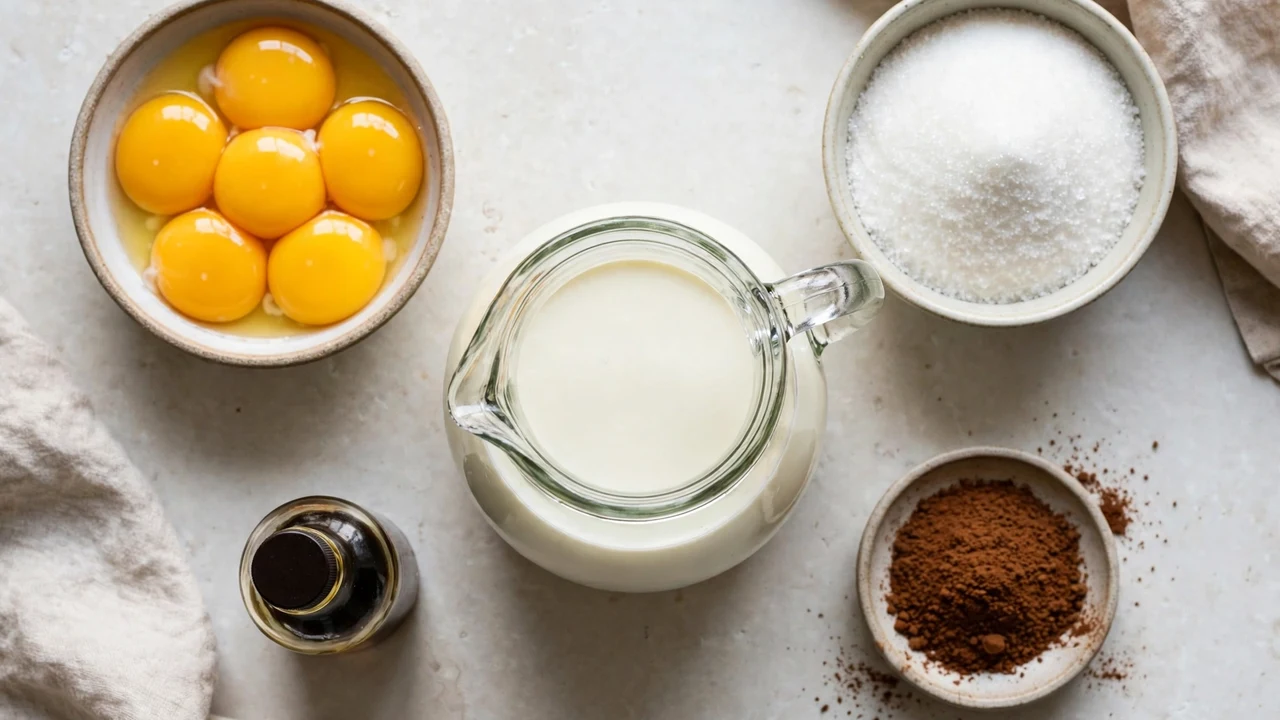
Six ingredients, measured exactly as the official page lists them. The sugar is divided: half whisked with the yolks, the rest saved for the topping.
| Ingredient | Amount | Notes |
| Egg yolks | 5 large | Yolks only; whites are not used |
| Granulated sugar | 3/4 cup (150g), divided | 1/2 cup (100g) with the yolks; the rest for the topping |
| Heavy cream | 3 cups (720ml) | Heavy cream or heavy whipping cream |
| Espresso powder | 1/2 teaspoon | Optional, but recommended; does not make it taste like coffee |
| Salt | 1/4 teaspoon | Balances the sweetness |
| Pure vanilla extract | 1 1/2 teaspoons | Added off the heat |
No prices are listed on the official recipe page, so no prices are given here. The ingredients are everyday supermarket items: eggs, sugar, cream, and vanilla, with espresso powder the only specialty item, and it is optional.
Substitutions Tested on the Official Page
| Original | Tested substitution | Result |
| 3 cups heavy cream | 3 cups half-and-half | Works, with a lighter texture |
| 1/2 tsp espresso powder | 2 tsp quality instant coffee | Works; or leave it out entirely |
| 1 1/2 tsp vanilla extract | Seeds of 1/2 vanilla bean, or 1 tsp vanilla bean paste | Works |
| Granulated sugar topping | Regular granulated sugar, as listed | Tested against superfine and coarse sugar; regular granulated sugar is the page’s choice |
| 8 shallow ramekins | 1 large wide ceramic or glass dish | Works with a longer bake time; never use metal |
Our Review
Based on the official page, this recipe’s strength is its ratio: 5 yolks to 3 cups of cream gives a custard that sets reliably in the water bath, and the page reports testing several ratios before settling on this one. The 4.7 rating from 148 reviewers supports that claim. The espresso powder is the quiet detail: optional, recommended, and present only to deepen the flavor, not to add a coffee taste. The one demand the recipe makes is time, not skill: the 4-hour chill cannot be shortened, and the topping cannot be torched ahead. Accept those two rules and the rest is whisking and waiting.
The Doneness Test
Start checking at 30 minutes. The custards are done when the edges are set and the centers are still a little jiggly, like jello. An instant-read thermometer should read 170°F (77°C) in the center. The centers finish setting as they cool, so pulling them while they still jiggle is correct, not underdone.
Straining Is Optional
If the custard mixture has lumps after whisking, strain it through a fine-mesh sieve before dividing it among the ramekins. If the mixture is smooth, straining is not needed. The page gives this as a conditional step, not a required one.
Steps
- Preheat the oven to 325°F (163°C). Bring a small kettle of water to a boil for the water bath.
- Whisk 5 egg yolks with 1/2 cup (100g) of the granulated sugar until combined.
- In a medium saucepan, combine 3 cups heavy cream, 1/2 teaspoon espresso powder, and 1/4 teaspoon salt. Heat over medium heat, stirring occasionally, until just simmering.
- Remove the pan from the heat and stir in 1 1/2 teaspoons vanilla extract.
- Temper the yolks: slowly whisk about 1/2 cup of the warm cream into the yolk mixture, then whisk the yolk mixture back into the saucepan with the rest of the cream.
- Strain the mixture through a fine-mesh sieve only if it has lumps.
- Place 8 shallow 4-ounce ramekins in a large baking pan. Divide the custard among them, filling to the top.
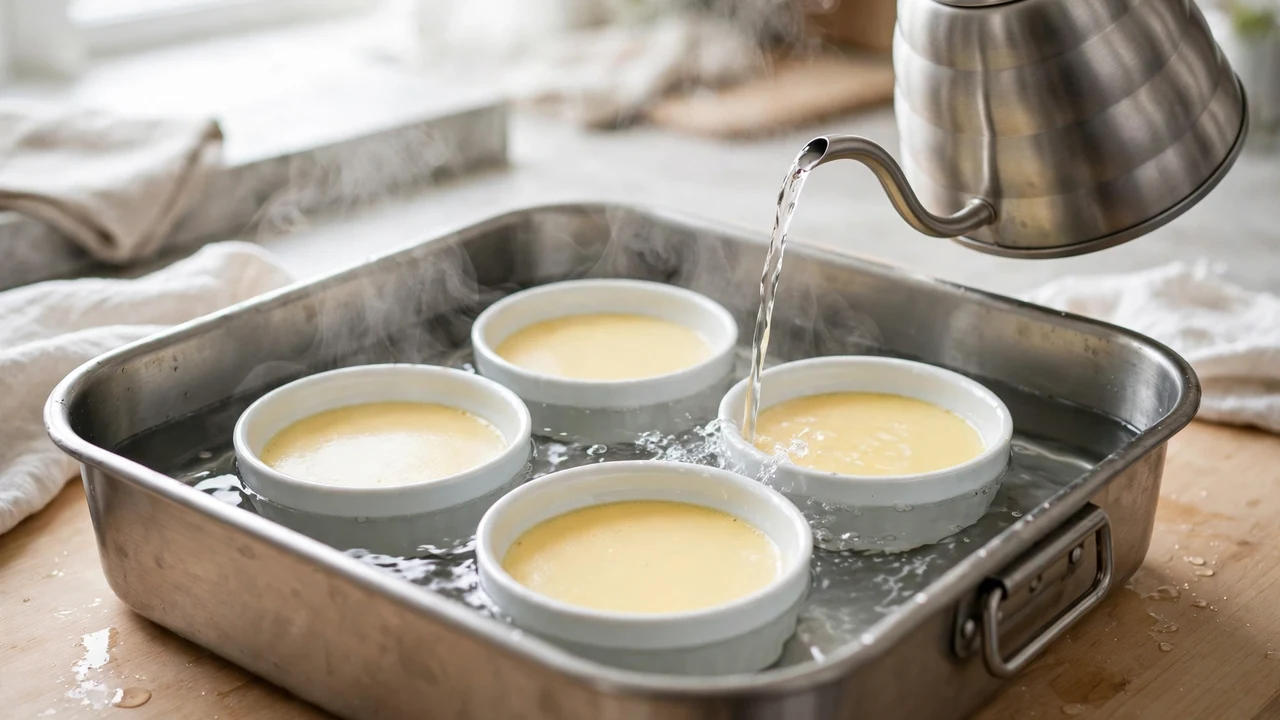
- Fill the pan with about 1/2 inch of hot water, taking care not to splash water into the custards. Bake until the edges are set and the centers are a little jiggly, about 35 minutes, checking from 30 minutes; thermometer 170°F (77°C).
- Remove the ramekins to a wire rack and cool for at least 1 hour. Refrigerate loosely covered for at least 4 hours and up to 2 days.
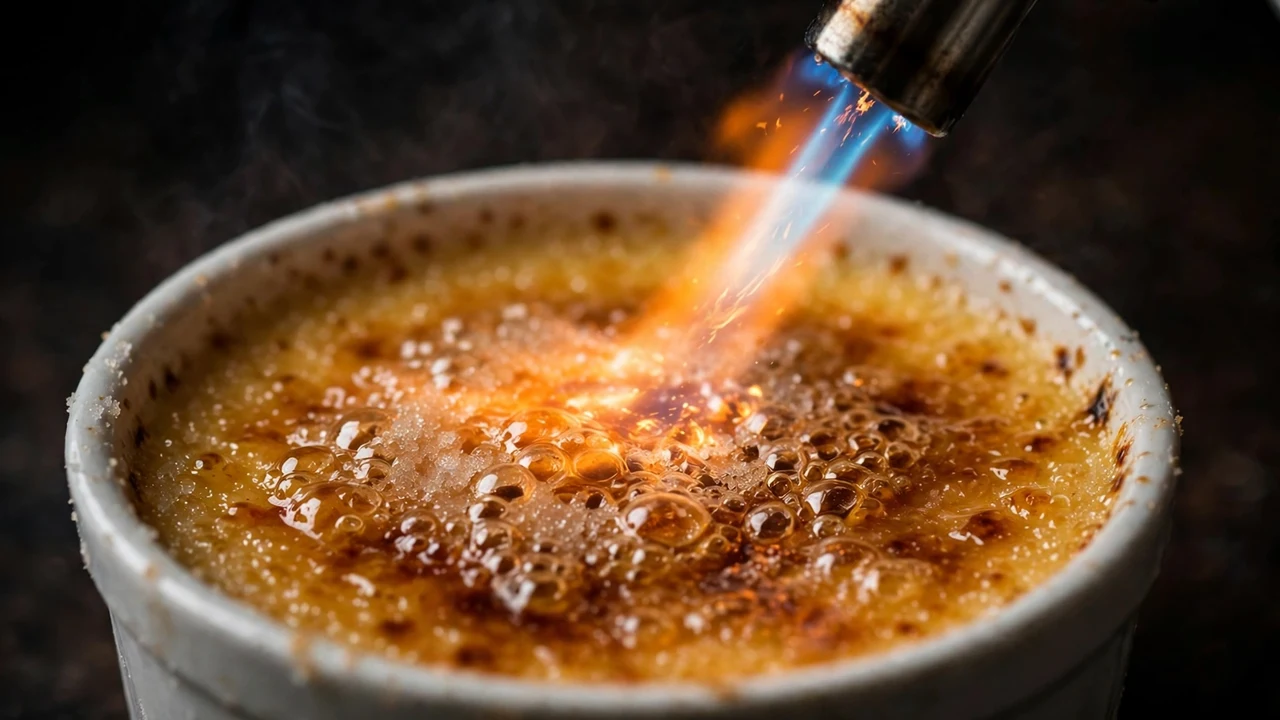
- At serving time, sprinkle a thin layer of the remaining granulated sugar over the entire surface of each custard, with no exposed custard showing. Caramelize with a kitchen torch, or place under the broiler on high and watch closely. Serve immediately, or refrigerate for up to 1 hour before serving.
Picky Eats
Crème brûlée is a strong picky-eater dessert: smooth, sweet, warm-topped, and chunk-free, with no visible mix-ins. The espresso powder is optional and can be left out for sensitive palates, and it does not make the dessert taste like coffee. The 4-ounce ramekin is already a small portion. The source includes no child taste test, so this section sticks to what the page says.
Parents’ Review & Family Tips
For families, the make-ahead window is the whole point: bake up to 2 days early, keep the custards chilled, and torch at the table, which children love to watch. Kid jobs: whisking, and sprinkling the sugar. Adult-only jobs: the hot water bath, the oven, and the torch. The recipe contains egg and dairy, and it is not dairy-free or egg-free as written. It is a gluten-free dessert, per the page. The source includes no parent review, so this section sticks to what the page says.
Nutrition & Carbohydrate Information
The official recipe page publishes no nutrition panel for this recipe. The figures below are estimates from the ingredient profile across 8 servings, labeled as estimates, not official figures.
| Measure | Per serving, 1 ramekin (estimate) |
| Calories | About 530 to 560 kcal |
| Total fat | About 45 to 48g |
| Carbohydrates | About 25 to 28g |
| Protein | About 6g |
What to Know Before Baking
- Count the ramekins first: 8 shallow 4-ounce ramekins, or one large wide ceramic or glass dish, never metal, with a longer bake time.
- Use a kettle for the water bath. Pouring about 1/2 inch of hot water around the ramekins is easier and safer from a kettle than from a jug.
- Start checking at 30 minutes. The centers should jiggle like jello when the custards come out; they set as they cool.
- Chill the full minimum of 4 hours. The custard will not hold the sugar shell if it is still warm.
- Sugar must cover the entire surface, with no exposed custard, or the topping will not caramelize evenly. Cooled custard will curdle if the sugar layer is patchy, per the page’s warning.
- Never torch ahead. The topping is best right away, with at most 1 hour of refrigeration after torching.
- Make-ahead: the unbaked mixture keeps up to 1 day covered tightly; baked custards keep up to 2 days loosely covered. No freezing guidance exists on the official page, so none is given here.
Is It Worth It?
Yes. Six ingredients, 15 minutes of hands-on work, a 4.7 rating from 148 reviewers, and a dessert that can be finished 2 days before it is served: this is one of the best effort-to-effect ratios in baking. The only discipline needed is the chill and the topping rule. No cook test is claimed.
FAQ
What ingredients do I need for crème brûlée?
Six: 5 large egg yolks, 3/4 cup (150g) granulated sugar divided, 3 cups (720ml) heavy cream, 1/2 teaspoon espresso powder (optional but recommended), 1/4 teaspoon salt, and 1 1/2 teaspoons pure vanilla extract. It makes about 8 servings in shallow 4-ounce ramekins.
How long does crème brûlée take?
Five hours or more in total: about 15 minutes hands-on, about 35 minutes baking, 1 hour cooling, and at least 4 hours chilling, plus 1 to 2 minutes per ramekin to torch the topping. The chill cannot be shortened.
Can I make crème brûlée ahead of time?
Yes. Prepare the custard mixture through the water-bath step and refrigerate it, covered tightly, for up to 1 day before baking, or bake the custards and keep them chilled, loosely covered, for up to 2 days. Torch the sugar topping just before serving.
How do I store leftover crème brûlée?
Refrigerate baked custards, loosely covered, for up to 2 days, untorched. Cool for 1 hour first, chill at least 4 hours, and torch the topping fresh at serving time. Do not reheat, and do not freeze: the official page gives no freezing guidance.
How do I know when crème brûlée is done?
The edges are set and the centers are a little jiggly, like jello, and an instant-read thermometer reads 170°F (77°C) in the center. Start checking at 30 minutes. The centers finish setting as they cool.
Can I make crème brûlée without a torch?
Yes. Place the sugared custards under the broiler on high and watch them closely until the sugar caramelizes. A kitchen torch gives more control, but the broiler is the page’s stated alternative.
Related Food Guides
- What Ingredients Do I Need for Easy Crème Brûlée Recipe (6 Ingredients)?
- How Long Does Easy Crème Brûlée Recipe (6 Ingredients) Take?
- Can I Make Easy Crème Brûlée Recipe (6 Ingredients) Ahead of Time?
- How Do I Store Leftovers From Easy Crème Brûlée Recipe (6 Ingredients)?
- Strawberry Icebox Cake Recipe Full Guide
- How to Cook Perfect Bacon in the Oven (So Crispy)
- Best Classic Potato Salad Recipe (It’s a Winner!)
Sources & Review Notes
Researched recipe guide. The ingredients, amounts, temperatures, times, method steps, substitutions, and make-ahead windows were taken from the official recipe page, “Easy Crème Brûlée Recipe (6 Ingredients)”, published February 8, 2024, updated August 18, 2025, rechecked live on October 28, 2026. The page is adapted from Allrecipes and Mark Bittman, per its notes. No nutrition panel and no prices exist on the official page, so nutrition figures above are labeled estimates from the ingredient profile and no prices are listed. Reader comments on the page are reader comments, not the author’s testing, and are not used as facts. No cook test is claimed, and no figures were invented for items the page does not cover.