Location Label: At Home Kitchen Guide, Food Menu Journal
How To Make Iced Coffee at Home: 4 Tested Methods, Times and Tips
Learning how to make iced coffee at home saves money on a daily coffee habit and gives you the drink exactly the way you like it. Cafe iced coffee often costs more than hot coffee, because the cups cost more and cold drinks take more work. At home, you control the beans, the strength, the milk and the sweetness, and you can make a pitcher for the week in one go.
This guide shows you how to make iced coffee with four tested methods, so you can pick the one that fits your morning. The fastest way takes minutes. The tastiest way takes a day of waiting. We also cover iced coffee versus cold brew, the ratios that stop a watery drink, coffee ice cubes, milk and syrup options, and the Japanese flash brew method that cafes use for a bright, clear cup.

Iced Coffee at a Glance
Here is the short version of how to make iced coffee. Every method uses coffee and water as the only required ingredients. Milk, sweetener and syrup are optional.
| Detail | What to know |
|---|---|
| Methods tested | 4, from the Real Simple test: chilled leftover coffee, hot coffee over ice, cold brew, auto cold brew |
| Fastest | Hot coffee poured over ice, ready in minutes |
| Easiest | Chilled leftover coffee, brew once and chill in the fridge |
| Best flavor | Cold brew, steeped 16 to 24 hours, smooth and low in acidity |
| Key ratio | Brew about 1.5 times stronger than usual, or 1:8 coffee to water for pour over ice |
| Cold brew ratio | 4:1 water to coarse ground coffee, steep 16 to 24 hours |
| Storage | Sealed in the fridge 3 to 4 days; flavor fades after 24 hours |
| Best beans | Freshly roasted whole beans, ground at home; medium roast for most methods |
Why We Wrote This Guide
We wrote this guide because how to make iced coffee is one of the most searched coffee questions, and the answers online disagree in small but important ways. Some guides say cold brew needs 12 hours, others say 24. Some say to brew at normal strength, others say to double the grounds. A reader who follows the wrong advice ends up with a watery, weak drink and goes back to paying cafe prices.
The Real Simple test gave us a clean way to sort this out: one tester, one bag of whole medium roast beans ground at home, tap water, and four methods tasted black. The tester usually drinks iced coffee with almond milk, but tasted all four black to judge each technique fairly. Our goal: after reading this guide, you should know how to make iced coffee in the way that fits your time, equipment and taste.
The 4 Methods Compared
| Method | Time | Equipment | Flavor | Best for |
|---|---|---|---|---|
| 1. Leftover hot coffee, chilled | Brew time plus chilling | Any coffee maker | Clean, familiar | Busy mornings |
| 2. Hot coffee over ice | Minutes | Any maker, ice | Bright, can dilute | Right now |
| 3. Cold brew | 16 to 24 hours | Pitcher, sieve | Smooth, bold | Batch prep |
| 4. Auto cold brew | 90 minutes | Fellow Aiden | Near cold brew | Brewer owners |
No prices are listed here, because bean prices change by brand, store and country. The methods need no special purchase except method four, which needs a specific brewer.
Our Review: What the Test Found
The test had a clear result. The winner for ease was chilling brewed coffee in the fridge and revisiting it later that day or the next morning. It is simple and efficient, and it works well when you dress the drink up with honey, syrup or nut milk. The winner for flavor was cold brew, called the most delicious of the four, but also the most work. The tester said honestly that keeping up with cold brew at daily scale was not realistic. That split is the most useful finding for anyone learning how to make iced coffee: there is no single best method. It depends on what you value most, speed, flavor, or planning ahead.
Iced Coffee vs Cold Brew: What Is the Difference?
Iced coffee and cold brew are not the same drink, and the cold brew vs iced coffee question confuses many readers. Iced coffee starts as hot brewed coffee that is cooled down and poured over ice. Cold brew is coffee steeped in cold or room temperature water for 12 to 24 hours, then strained and served over ice.
The difference shows in the cup. Hot brewed iced coffee is brighter and more acidic. Cold brew is smoother, mellower, less bitter and less acidic, with more body and a naturally sweet note. Cold brew is usually made as a concentrate, about 4 parts water to 1 part coarse ground coffee, then diluted with water or milk. Iced coffee is brewed at drinking strength, or a little stronger to survive the ice. Knowing how to make iced coffee means knowing both. If you like bright coffee, start with hot brew. If hot brew tastes too sharp, try cold brew.
Method 1: Leftover Hot Coffee, Chilled in the Fridge
This is the easiest and quickest method to make iced coffee, and the tester’s overall winner for ease. Make hot coffee, then chill it. This simple iced coffee recipe needs nothing you do not already own, and an extra batch ready over ice really helps after the after lunch slump.
Ingredients: ground coffee and water.
- Brew coffee by your usual method, drip or pour over, using about 1.5 times the grounds you use for hot coffee, so the flavor survives the ice.
- Let it cool to room temperature, transfer it to a sealed container and chill it in the refrigerator.
- Serve over ice, adding milk or sweetener if you like.
Chilled brewed coffee keeps 3 to 4 days sealed in the fridge, though flavor fades after 24 hours, so drink it soon.
Method 2: Hot Coffee Poured Directly Over Ice
Method two is the fastest way to learn how to make iced coffee when you want it right now. Make hot coffee, let it cool slightly if time allows, and pour it directly over ice. The more ice you add, the more watered down the finished drink will be.
Ingredients: ground coffee and water.
- Brew stronger than normal, about 1.5 times the grounds, or a 1:8 coffee to water ratio, so melting ice brings it to normal strength.
- Fill a glass with ice, or better yet, coffee ice cubes.
- Pour the hot coffee over the ice, adding more ice as needed, and enjoy.
The most common iced coffee mistake is brewing at normal strength and pouring over a full glass of ice. The ice is not optional, it dilutes. Set the ratio before brewing, or the drink will always taste watery. One guide puts the strong brew at 1.5 tablespoons of coffee for every 6 ounces of water.

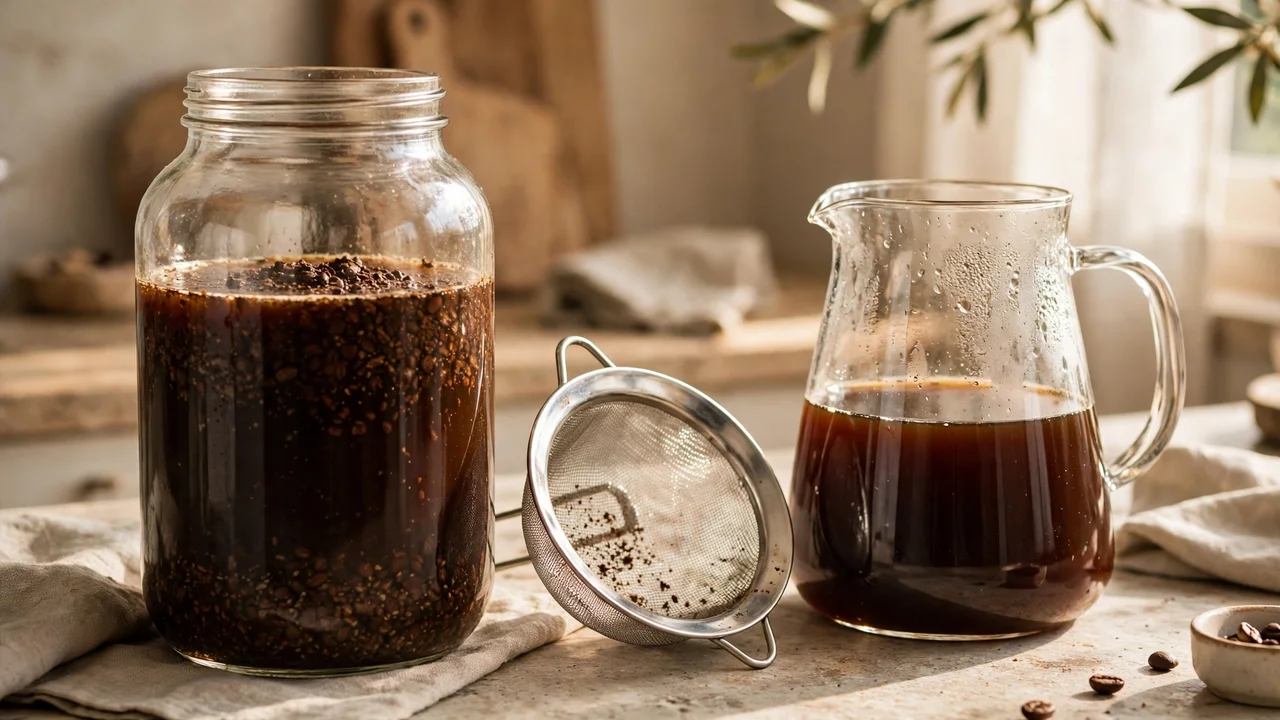
Method 3: Cold Brew, the Slow Way to Make Iced Coffee
Cold brew is the most labor intensive method in this guide to how to make iced coffee, but the results pay off if you like a bold, robust flavor. The tester called it the most delicious of the four methods. Other guides agree: cold brew is smoother, softer and less bitter than hot brewed iced coffee, and it suits medium to darker roasts best.
Ingredients: a 4:1 ratio of coarse ground medium or dark roast coffee beans to water.
- In a large pitcher, mix coarse ground coffee and cold or room temperature water and seal it closed.
- Let the coffee steep for 16 to 24 hours.
- Strain through a coffee filter and funnel or mesh sieve into a new container, chill and serve over ice, diluting with water or milk to taste.
Learning how to make cold brew is mostly a lesson in patience: one batch gives enough concentrate for 4 to 6 drinks. Dilute it about 1:1 with cold water or milk, and use it within 3 to 4 days.
One disagreement to state plainly: sources differ on steeping time. The Real Simple test steeps for 16 to 24 hours. Other guides give 12 to 18 hours, or 12 to 24 hours. All agree on coarse grounds and a long, slow steep. Weak batch: steep longer next time. Bitter batch: steep shorter or grind coarser.
Method 4: Auto Cold Brew on the Fellow Aiden
The fourth method for how to make iced coffee uses a machine, the Fellow Aiden Precision Brew Coffee Maker, which has a cold brew setting the tester had not yet tried. The setting for four cups takes 90 minutes. The machine tells you how many grams of coffee to weigh out and auto distributes the water.
Ingredients: coffee beans and water.
- Grind the beans. For 4 cups of cold brew, the tester needed 42 grams.
- Add the beans to a filter and start the machine on its cold brew setting.
- Once it has percolated, chill it in the fridge and serve over ice.
Auto cold brew is the shortcut version of method three: a cold brew style drink in 90 minutes. The trade off is the equipment. A pitcher and a sieve give a similar result for no extra cost.
Bonus Method: Japanese Flash Brew (Iced Pour Over)
Japanese iced coffee, also called flash brew, is the method used at specialty cafes, and several guides call it the best way to make iced coffee when flavor clarity matters. You brew hot coffee directly onto ice, which flash chills it the instant it leaves the dripper. You brew hot, so the coffee extracts its full aromatic range, but you cool it instantly, so the flavor stays bright and clear.
This method needs a pour over setup, such as a V60 or Chemex. Split the total water about 60 percent hot water and 40 percent ice. For one large cup: about 22 grams of coffee, 210 grams of hot water and 140 grams of ice. Grind a little finer than for a normal pour over. The ice is not extra dilution, it is the dilution built into the recipe.
How to Stop Watery Iced Coffee
Watery iced coffee has three fixes. First, brew strong, about 1.5 times the normal grounds, or a 1:8 coffee to water ratio for pour over. Second, use coffee ice cubes: freeze leftover brewed coffee in a tray, then use the cubes instead of regular ice, so melting ice adds coffee instead of water. That is the secret to iced coffee without dilution. Third, chill the brewed coffee in the fridge before pouring it over ice, so less ice melts. For a 10 minute version, brew strong, fill a tall glass with coffee ice cubes, let the coffee cool a few minutes, then pour it slowly over the ice. That is how to make iced coffee in 10 minutes, with no watery finish.
Iced Coffee Ingredients, Milk and Syrup Options
When you learn how to make iced coffee, the only required iced coffee ingredients are coffee and water. For milk, use dairy milk, cream, almond milk, oat milk or any plant based milk you like. For sweetness, try sugar, honey, simple syrup or flavored syrups such as vanilla. Simple syrup dissolves better in cold coffee than granulated sugar. For iced coffee with milk, cold brew concentrate is the best base, because its strong, smooth flavor holds up under milk and cream. Hot brewed iced coffee is the best base for drinking black.

Picky Eats: For Fussy Coffee Drinkers
If someone in your house says they do not like iced coffee, ask which version they tried. Learning how to make iced coffee means finding the version each person likes. A person who hates bitter cold brew may love a bright flash brew, and a person who finds hot brew too sharp may love cold brew.
- Too bitter: switch to cold brew, use a coarser grind, or add milk and a little sweetener.
- Too acidic: try a medium or dark roast, or switch to cold brew, which is lower in acidity.
- Too weak: brew stronger, use coffee ice cubes, or pour over less ice.
- Too strong: dilute cold brew concentrate with more water or milk, or add extra ice.
- Let each person add their own milk and sweetener at the table.
Parents Review and Family Tips
Iced coffee is an adult drink. Children should not drink caffeinated coffee, so keep the pot and the cold brew jar out of reach, and do not leave a full glass where a small child can grab it. Make coffee ice cubes on Sunday, so weekday iced coffee is ready in minutes. Keep a sealed pitcher in the fridge, labeled with the brew day, and use it within 3 to 4 days. Use a sturdy, non slip glass, because condensation makes glasses slippery.
Nutrition and Carbohydrate Information
We do not publish a nutrition panel for this guide, because the calories and carbohydrates in iced coffee depend entirely on what you add. Black iced coffee, made from coffee and water alone, has almost no calories and almost no carbohydrates. The numbers change as soon as you add milk, cream, sugar, honey or syrup. Any guide that gives one fixed calorie number for iced coffee is guessing, so we will not do that.
As a method, not a measurement: to keep iced coffee light, drink it black or with a splash of unsweetened almond milk, which is what the Real Simple tester used. To estimate your own cup, add up the milk, cream and sweetener you use, from the labels on those products. The USDA FoodData Central database lists plain brewed coffee at about 2 calories per cup, with milk, cream and sugars listed separately. Do not freeze beans or grounds: freezing can cause oxidation and flatten flavor. Buy freshly roasted beans and store them sealed in a cool, dry place.
What to Know Before You Brew
Before you learn how to make iced coffee at home, keep these points in mind.
- Start with fresh beans. Buy freshly roasted beans instead of beans or ground coffee in bulk.
- Grind at home. The test used whole medium roast beans, ground at home, plus tap water.
- Match grind and roast to the method: coarse for cold brew, finer for iced pour over; light roasts for flash brew, darker for cold brew.
- Do not freeze beans or grounds. Plan cold brew a day ahead: a 16 to 24 hour steep means starting today for tomorrow morning.
Is It Worth Making Iced Coffee at Home?
Yes. Learning how to make iced coffee at home is worth it for almost everyone who drinks iced coffee more than once a week. You save money, you control the strength and sweetness, and once you know how to make iced coffee, a batch made in advance makes the morning take two minutes instead of a cafe trip.
Start with chilled leftover coffee. It was the tester’s winner for ease, it needs no new equipment, and it turns coffee you already brewed into tomorrow’s iced coffee. If you want the smoothest cup, move on to cold brew next, and accept the overnight wait as the price of the flavor. Either way, you now know how to make iced coffee in four tested ways, plus the cafe flash brew method.
Frequently Asked Questions
What is the easiest way to learn how to make iced coffee at home?
The easiest way to learn how to make iced coffee is to brew a pot of hot coffee, chill it in the fridge in a sealed container, and pour it over ice later that day or the next morning. That is how to make iced coffee with no special equipment and any coffee maker you own.
What is the difference between iced coffee and cold brew?
Iced coffee starts as hot brewed coffee that is cooled and poured over ice, so it tastes bright and familiar. Cold brew is steeped in cold water for 12 to 24 hours, so it tastes smoother, mellower and less acidic. Cold brew is made as a concentrate and diluted before drinking. That is the first thing to know about how to make iced coffee: pick hot brew or cold brew.
How long does cold brew need to steep?
Sources disagree slightly. The Real Simple test steeps cold brew for 16 to 24 hours at a 4:1 water to coffee ratio. Other guides give 12 to 18 hours, or 12 to 24 hours. Start with 16 hours, taste it, and steep longer next time if it tastes weak.
How do I stop my iced coffee from tasting watery?
Brew about 1.5 times stronger than you would for hot coffee, so melting ice brings the drink to normal strength. Use coffee ice cubes, made by freezing leftover brewed coffee, instead of regular ice. Chill the brewed coffee in the fridge before pouring it over ice, so less ice melts. These three fixes are the core of how to make iced coffee that never tastes watery.
Can I make iced coffee without a special brewer?
Yes. Three of the four tested methods need nothing more than the coffee maker you already own, a pitcher or jar, and ice. Only auto cold brew needs a specific machine, the Fellow Aiden, so most readers can learn how to make iced coffee with what they already own. A plain pitcher, a mesh sieve and a coffee filter are enough for cold brew.
How long does homemade iced coffee keep in the fridge?
When you learn how to make iced coffee in batches, storage matters: chilled brewed coffee and cold brew concentrate keep 3 to 4 days in a sealed container in the refrigerator. Flavor fades noticeably after 24 hours, so drink it within a day or two for the best taste.
Related Food Guides
If you enjoyed this guide to how to make iced coffee, these Food Menu Journal guides cover more drinks and menus to try next.
- Dutch Bros Menu: Drinks, Prices and What to Order, our guide to the Dutch Bros menu, including the Golden Eagle, the 9-1-1, the Annihilator and the Caramelizer.
- 7 Brew Menu: Drinks, Prices and What to Order, our guide to the 7 Brew drive thru coffee menu, another favorite stop for iced coffee lovers.
- Applebee’s Happy Hour 2026 Guide, our pillar guide to Applebee’s happy hour times, drinks and appetizers.
Sources and Review Notes
This guide is a researched guide, not a visit report. We did not visit a cafe, and we did not taste these drinks ourselves. The facts about how to make iced coffee come from the sources below, checked on 9 November 2026.
- Real Simple, “I Tried 4 Different Ways to Make Iced Coffee, This One Was the Clear Winner”, https://www.realsimple.com/i-tried-different-ways-to-make-iced-coffee-this-one-was-the-clear-winner-11994077
- Calm Coffee Roastery, “How to Brew Better Iced Coffee at Home”, https://calmcoffeeroastery.co.uk/blogs/brewing/how-to-brew-better-iced-coffee
- Coffeecessory, “How to Make Iced Coffee at Home (3 Methods, Any Budget)”, https://www.coffeecessory.com/blog/how-to-make-iced-coffee-at-home.html
- Sage Alpha Gal, “How to Make Iced Coffee at Home (Just Like a Barista)”, https://sagealphagal.com/how-to-make-iced-coffee-at-home/
- Coffee Gear Hub, “How to Make Iced Coffee at Home: 3 Easy Methods (+ Ratios)”, https://www.coffeegearhub.com/how-to-make-iced-coffee-at-home/
- USDA FoodData Central, for the note that plain brewed coffee is about 2 calories per cup, with milk, cream and sugars listed separately.