Label: Comparison Guide | Christmas Dinner Menu | Food Menu Journal
Christmas Ham vs Prime Rib: The Complete Guide to What to Serve
Author and Visit Details: An Honest Researched Guide
This Christmas ham vs prime rib guide is a researched guide, not a restaurant visit report and not a bake test in our own kitchen. We did not cook both roasts side by side in one kitchen, and we do not claim that we did. We compared published recipes, butcher guides, university extension serving guides, USDA food safety guidance and retailer price lists checked on 6 November 2026, and we state where sources disagree. Prices below are ranges only, because prices change by store, grade and region. Use this Christmas ham vs prime rib comparison to plan your menu, then check your own butcher or store price before you buy.
Introduction: Why the Christmas Ham vs Prime Rib Choice Matters
Every December, the same question decides the whole Christmas table: in the Christmas ham vs prime rib debate, which main deserves the center of the plate? Christmas ham is sweet, salty, forgiving and generous with leftovers. Christmas prime rib is rich, beefy, dramatic and made for a special occasion. Both feed a crowd, both look impressive, and both pair with classic Christmas sides, but they ask very different things from the cook, the budget and the guests. This Christmas ham vs prime rib guide walks through taste, texture, cost, serving size, cooking effort, leftovers, wine, sides and food safety, so you can choose with confidence instead of guessing on Christmas Eve.
If you are still building the full menu, start with our Christmas dinner menu guide, which brings the whole holiday meal together in one place. The Christmas ham vs prime rib decision sits at the center of that menu, and everything else, from potatoes to dessert, follows from it.
Featured Image
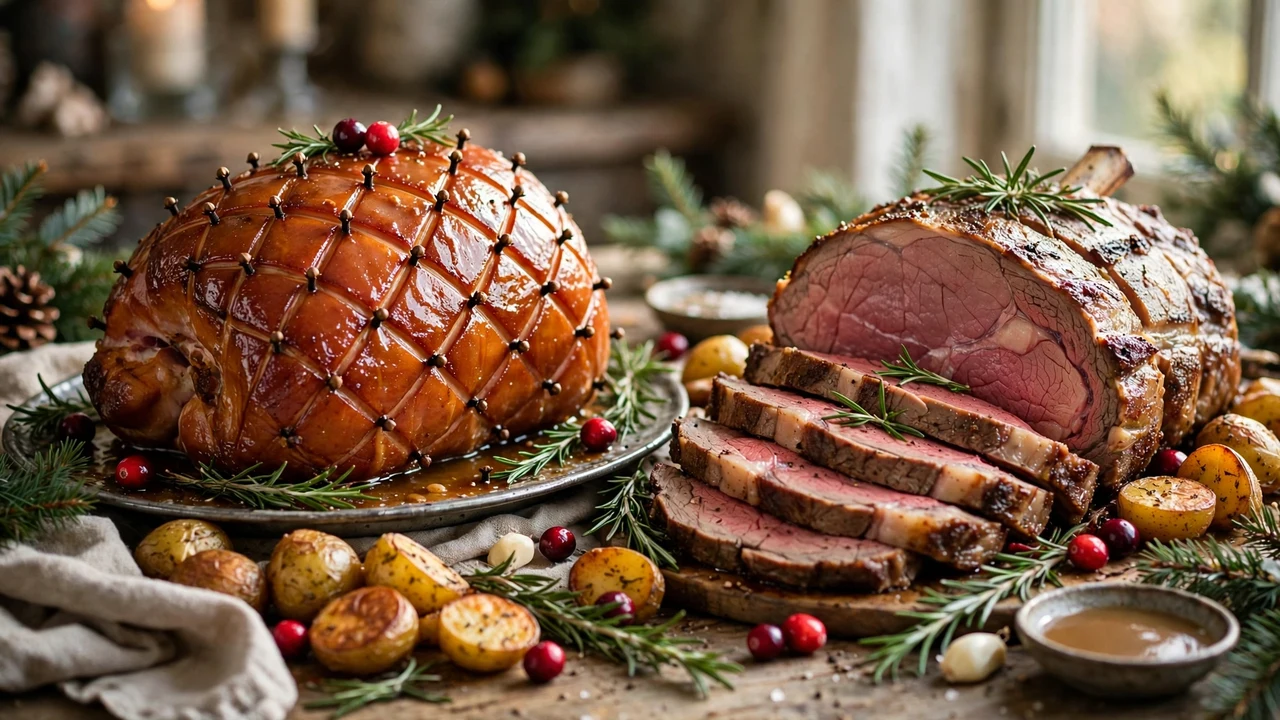
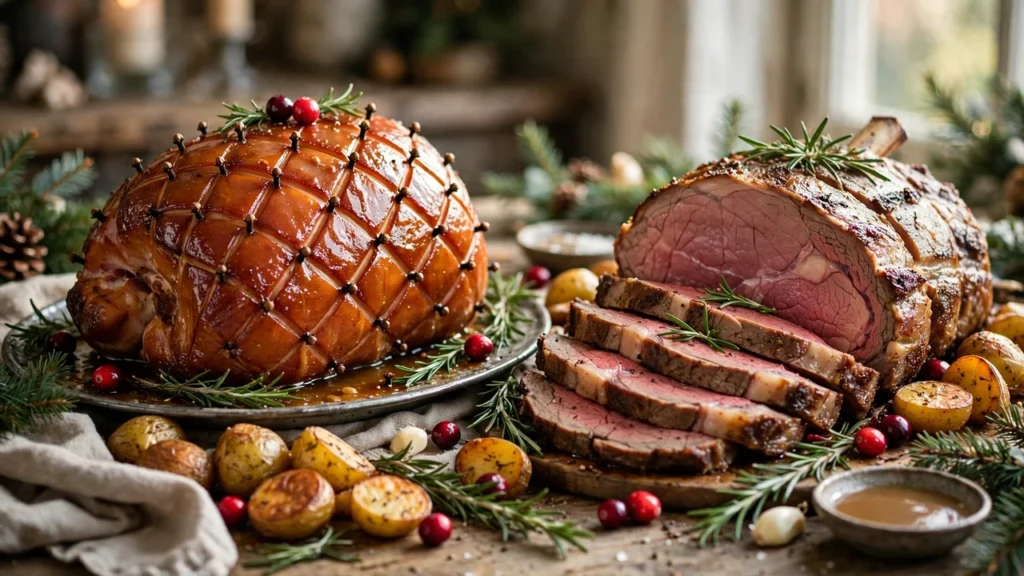
Christmas Ham vs Prime Rib At a Glance
| Point | Christmas Ham | Christmas Prime Rib |
|---|---|---|
| Flavor | Sweet, salty, smoky, with a sticky glaze | Rich, beefy, buttery, with a roasted crust |
| Best for | Large crowds, buffet tables, easy hosting | Smaller groups, a luxury centerpiece, beef lovers |
| Effort | Low, most hams are fully cooked and need reheating | Medium, needs careful temperature control |
| Price range per pound (US, 2026, estimate) | About $2 to $8 per pound, spiral ham often $2.39 to $3.59 at Costco | About $12 to $35 per pound, Choice bone in often $15 to $25 |
| Serving per person | Boneless 1/4 to 1/3 pound, bone in 1/3 to 1/2 pound | Bone in about 1 pound, boneless 1/2 to 3/4 pound |
| Leftovers | Excellent, sandwiches, soup, fried rice | Good for 3 to 4 days, best sliced thin and reheated gently |
| Classic sauce | Mustard, pineapple glaze, brown sugar glaze | Horseradish cream, au jus, red wine sauce |
| Wine pairing | Riesling, Gewurztraminer, Pinot Noir | Cabernet Sauvignon, Barolo, Brunello |
In short, the Christmas ham vs prime rib question has no single right answer. Ham wins on ease and value. Prime rib wins on luxury and drama. Your guest list, your budget and your comfort with a meat thermometer should decide it.
Why We Made This Christmas Ham vs Prime Rib Guide
Competitor guides cover ham and prime rib separately, or they list both as options without comparing them head to head. We read the Google top results and the Bing top results for this topic on 6 November 2026, and the gaps were clear: few guides gave both serving sizes side by side, few gave current price ranges with sources, and few explained what happens when you serve both. This Christmas ham vs prime rib guide fills those gaps. It covers taste, cost, timing, oven space, sides, wine, leftovers, allergies, kids, and the serve both option, so one page answers the whole decision.
Ingredients and Prices: What Each Main Needs
| Item | Christmas Ham | Christmas Prime Rib |
|---|---|---|
| Main cut | Bone in spiral ham, half ham or whole ham, smoked or cured | Standing rib roast, bone in or boneless, USDA Choice or Prime grade |
| Glaze or rub | Brown sugar, honey or maple, Dijon mustard, cloves, pineapple juice | Coarse salt, black pepper, garlic, rosemary, thyme |
| Sauce | Mustard, glaze drippings | Horseradish cream, au jus from pan drippings |
| Equipment | Roasting pan, foil, meat thermometer | Roasting rack, large pan, instant read thermometer, carving knife |
| Price range per pound (estimate) | $2 to $8, specialty smoked ham $8.50 to $12 | $12 to $35, Wagyu cross $50 to $80 |
| Typical total for 10 guests (estimate) | 5 to 8 pound ham, about $15 to $60 | 8 to 10 pound bone in roast, about $120 to $300 |
Prices are estimates from retailer and butcher lists checked in November 2026, including a Costco guide listing spiral ham at $2.39 to $3.59 per pound and prime rib guides listing $15 to $25 per pound for Choice cuts. Holiday sales can cut prime rib sharply in mid December, with some grocers advertising Choice bone in roasts at $5.99 to $8.99 per pound, so check weekly circulars before you buy. Do not treat any price here as a store quote.
Our Review: How Christmas Ham vs Prime Rib Really Compares
Our review of the Christmas ham vs prime rib choice is based on published guides, not on a single cook test, and we say that plainly. Ham is the safer host choice. It is already cooked, so you reheat it to 140 degrees F and glaze it in the last stretch. It forgives a late oven, a crowded kitchen and a distracted cook. Prime rib is the bolder host choice. It rewards attention with a rosy center, a salty crust and a silence at the table when the first slice lands, but it punishes guesswork. Without a thermometer, you risk a grey, dry roast that cost a lot.
Best Christmas Ham: Taste, Texture and Why Guests Love It
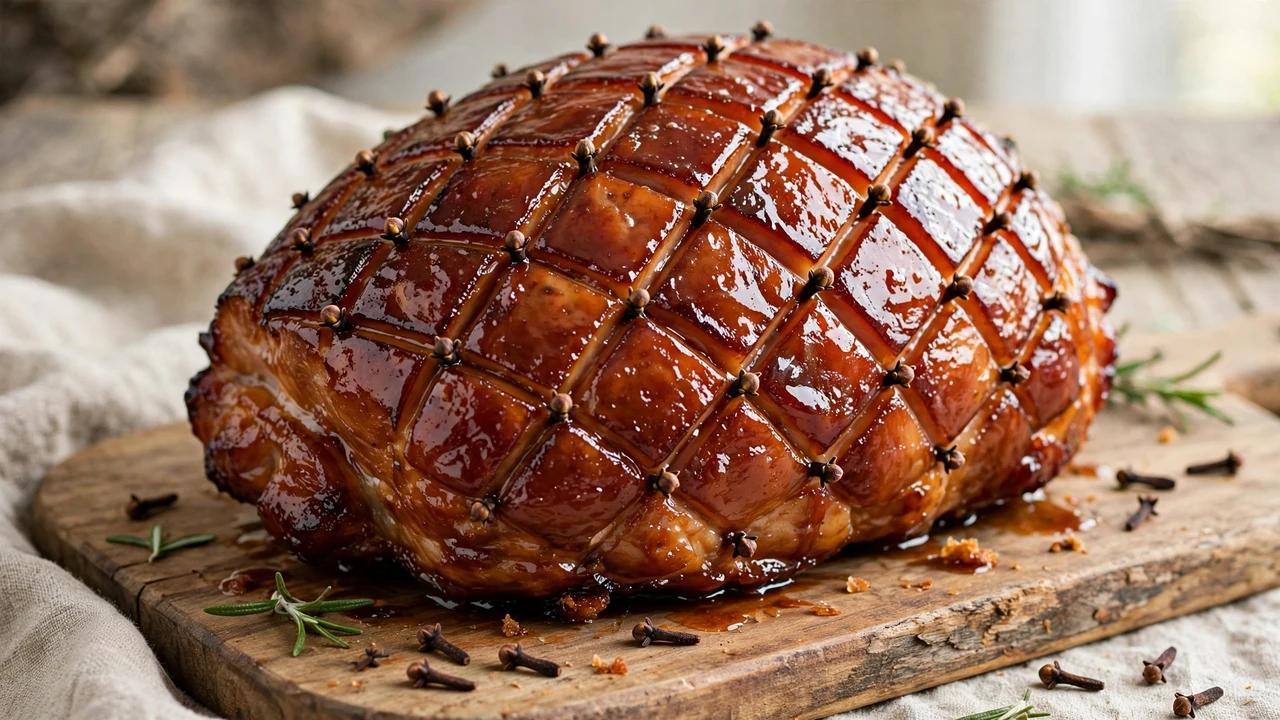
The best Christmas ham is a balance of sweet and salty. A brown sugar and honey glaze caramelizes on the scored fat, cloves add warmth, and the meat stays juicy because most hams are fully cooked and only need gentle reheating. Spiral sliced ham is easy to serve, and every slice carries glaze. The downside is salt: cured ham is salty by nature, and a very sweet glaze can tip it into candy territory. Pair it with something sharp, like mustard or cranberry sauce, and something creamy, like scalloped potatoes. In the Christmas ham vs prime rib comparison, ham is the crowd pleaser that asks the least of the cook.
Best Christmas Prime Rib: Taste, Texture and the Luxury Factor
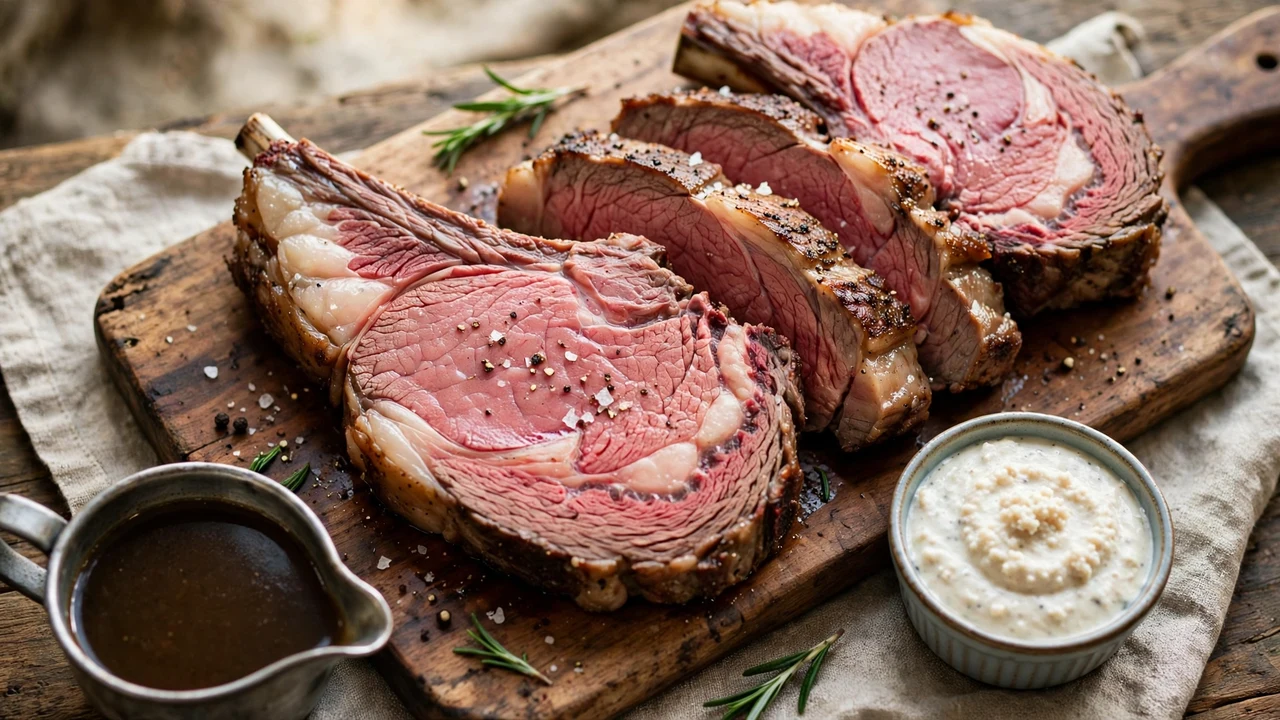
The best Christmas prime rib is medium rare, with a warm red center, a crisp salty crust and fat that melts into the meat. It comes from ribs 6 to 12 of the beef rib section, and its marbling is what makes it tender. Season it simply with salt, pepper, garlic and rosemary, roast it low and slow, then rest it 20 to 30 minutes before carving. The USDA safe minimum for beef roasts is 145 degrees F with a 3 minute rest, while most chefs target 130 to 135 degrees F for medium rare, pulling the roast at 120 to 125 degrees F and letting carryover heat finish it. That disagreement matters: 145 degrees F is the safety floor, 130 to 135 degrees F is the flavor target most guides recommend, and guests who are pregnant, older, very young or immunocompromised should be served meat cooked to the USDA minimum. In the Christmas ham vs prime rib debate, prime rib is the luxury pick, and the thermometer is not optional.
Top Side Dishes for Christmas Ham vs Prime Rib
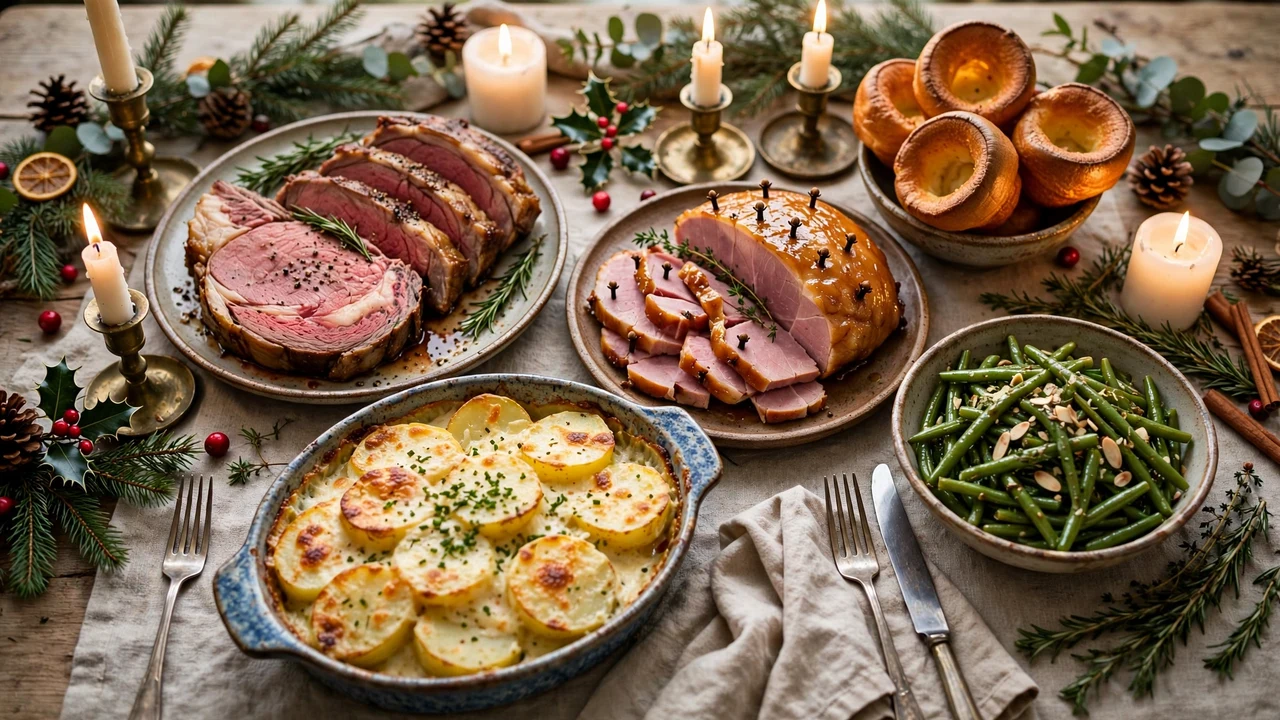
Sides should balance the main, not repeat it. For Christmas ham, competitors agree on creamy and slightly sweet sides: scalloped potatoes, roasted sweet potatoes, baked mac and cheese, green bean casserole, glazed carrots and soft potato rolls for leftover sandwiches. For Christmas prime rib, the classic sides are steakhouse sides: Yorkshire pudding, Hasselback or duchess potatoes, green beans with mushrooms, Brussels sprouts gratin and creamy horseradish sauce. If you serve both mains, pick one potato, two vegetables, one bread and one sauce, and let guests mix. Our Traditional Christmas Dinner guide gives the full roast, sides and desserts plan that works with either main.
Step-by-Step Timing: How to Cook Christmas Ham vs Prime Rib Without Panic
Plan backward from serving time. A 12 pound turkey takes about 3 hours at 325 degrees F, and prime rib needs about 15 to 20 minutes per pound at 325 degrees F, so a 10 pound roast needs roughly 2.5 to 3.5 hours plus resting. Ham reheats faster, usually about 10 to 15 minutes per pound at 325 degrees F, and it can rest under foil while the prime rib rests. If you cook both, start the prime rib first, add the ham later, and use the resting window to finish sides and gravy. A proven plan is to roast the prime rib in the morning, rest it, then reheat the ham while the beef rests, so both land hot at the same time.
Cost and Serving Size: The Christmas Ham vs Prime Rib Budget Test
Cost is where the Christmas ham vs prime rib gap is widest. For 10 guests, ham needs about 5 pounds bone in and prime rib needs about 10 pounds bone in, because bone adds weight but not servings. At the ranges above, ham for 10 costs roughly $15 to $60, while prime rib for 10 costs roughly $120 to $300 before sides. Sources disagree on exact serving sizes: South Dakota State University Extension gives boneless ham at 1/4 to 1/3 pound per person and bone in ham at 1/3 to 1/2 pound, while other guides give 1/2 to 3/4 pound for bone in ham. For prime rib, the same extension guide gives one rib per two people bone in, or 1/2 to 3/4 pound per person boneless, while other guides give 1 pound per person bone in. We use the extension figures as the base and round up when guests are hungry or you want leftovers.
Can You Serve Both? The Secret Third Option in Christmas Ham vs Prime Rib
Yes, and many families do. Serve a smaller prime rib as the showpiece and a ham as the generous second main, or serve ham as the main and prime rib as a carving station. This solves mixed diets, picky eaters and the guest who does not eat beef or pork. It also solves leftovers: ham keeps well for sandwiches, prime rib slices thin for next day steak sandwiches. The cost sits between the two single main options, and the oven plan above makes it workable. If you go this route, our Christmas party food guide has 25 appetizers that keep guests happy while the roasts rest.
Wine, Drinks and Sauces for Christmas Ham vs Prime Rib
Wine follows the main, not the occasion. Cabernet Sauvignon is the classic prime rib partner, with Barolo and Brunello as strong alternatives. Riesling and Gewurztraminer are the smart ham partners, because their fruit and acidity cut through sweet glaze and salt. Pinot Noir is the peacemaker that works with both, plus turkey and duck, so it is the best single bottle when you serve both mains. For non drinkers, sparkling apple cider, cranberry spritz and a good ginger ale all work. See our Christmas Eve dinner guide for a fuller drinks and menu plan.
Picky Eats: What If Guests Do Not Like Ham or Beef?
Picky eaters are common at Christmas, and the Christmas ham vs prime rib choice can make or break their plate. Ham is usually the safer picky eater pick, because it is sweet, familiar and easy to slice thin. Prime rib can look too pink for some guests, so always cook a few end slices further, or offer a small portion cooked to medium, at 140 to 145 degrees F. Offer a plain option with no sauce, a bread roll, and a simple side like mashed potatoes with no bacon. For guests who eat neither pork nor beef, a roast turkey or a nut roast keeps them included, and our traditional dinner guide covers both. Never force a tasting: a full plate with sides is a win.
Parents Review and Family Tips for Christmas Ham vs Prime Rib
Parents in our research notes keep coming back to the same three points. First, ham is easier with kids, because it slices fast, needs no carving drama and makes next day sandwiches kids actually eat. Second, prime rib is a treat, not an everyday meal, so save it for the year when the guest list is small and the budget allows it. Third, involve kids in the glaze or the horseradish sauce, not in the carving. Family tips that work: buy the ham a week early and freeze it if needed, order the prime rib from the butcher at least a week ahead, keep a meat thermometer in the drawer and test it in ice water first, and carve prime rib only after a full rest, or the juices run out onto the board.
Nutrition and Carbohydrate Info for Christmas Ham vs Prime Rib
We give only general, sourced style figures here, and we label them as estimates, because exact nutrition depends on cut, glaze, fat trim and portion. A 3 ounce cooked serving of ham is roughly 130 to 180 calories with about 1 to 2 grams of carbohydrate before glaze, and a sweet glaze adds sugar and carbohydrate, often 5 to 10 grams per serving as an estimate. A 3 ounce serving of prime rib is roughly 200 to 300 calories with near zero carbohydrate before sauce, and horseradish cream adds a small amount of fat and carbohydrate. Both are high in sodium and saturated fat as holiday foods, and ham is usually higher in sodium. Check the label on your exact ham and the grade of your roast for the numbers that apply to your table, and do not use these estimates as medical advice.
What to Know Before You Cook Christmas Ham vs Prime Rib
- Order early: butchers sell out of standing rib roasts and spiral hams in December, so order at least one week ahead.
- Thaw in the fridge, never on the counter: a large roast needs 48 hours or more to thaw fully.
- Use a thermometer, not time alone: ovens vary, and time per pound is only a guide.
- Rest the prime rib 20 to 30 minutes, tented loosely with foil, before carving.
- Reheat ham gently at 325 degrees F and glaze it in the last 20 to 30 minutes so the sugar does not burn.
- Keep leftovers in the fridge and eat them within 3 to 4 days, reheating to 165 degrees F.
- Check allergies: ham glaze may contain mustard or pineapple, horseradish sauce may contain dairy, and Yorkshire pudding contains egg, milk and wheat.
Is Christmas Ham vs Prime Rib Worth It?
Yes, both are worth it, for different tables. Christmas ham is worth it when you want an easy, generous, budget friendly Christmas with great leftovers. Christmas prime rib is worth it when you want a luxury centerpiece for a smaller group and you are willing to watch a thermometer. If you can only pick one and you are hosting more than 12 people, pick ham. If you are hosting 6 to 8 people and you want the meal to feel like an occasion, pick prime rib. If you are torn, serve both in smaller sizes: that is the most popular compromise in the guides we read, and it is the one we recommend most often in this Christmas ham vs prime rib guide.
FAQ: Christmas Ham vs Prime Rib
Which is better, Christmas ham vs prime rib?
Neither is better for every table. Ham is better for large crowds, easy hosting and value. Prime rib is better for luxury, beef lovers and a smaller group. In our Christmas ham vs prime rib comparison, pick ham for ease and prime rib for drama.
How much Christmas ham vs prime rib do I need per person?
For ham, plan 1/4 to 1/3 pound per person boneless and 1/3 to 1/2 pound bone in. For prime rib, plan about 1 pound per person bone in and 1/2 to 3/4 pound boneless. Round up for hungry guests and leftovers.
What temperature should prime rib reach in the Christmas ham vs prime rib guide?
The USDA safe minimum is 145 degrees F with a 3 minute rest. Most chefs target 130 to 135 degrees F for medium rare, pulling the roast at 120 to 125 degrees F. Serve guests who need the safest option at 145 degrees F or above.
Can I serve both ham and prime rib at Christmas?
Yes. Serve a smaller prime rib as the showpiece and ham as the generous second main. Start the prime rib first, add the ham later, and rest both before carving.
Which is cheaper in Christmas ham vs prime rib?
Ham is much cheaper. Ham ranges about $2 to $8 per pound in 2026 guides, while prime rib ranges about $12 to $35 per pound. Holiday sales can lower prime rib, so check circulars in mid December.
What sides go with Christmas ham vs prime rib?
Ham pairs with scalloped potatoes, sweet potatoes, mac and cheese, green bean casserole and glazed carrots. Prime rib pairs with Yorkshire pudding, Hasselback potatoes, Brussels sprouts gratin and horseradish sauce.
Related Guides
- Christmas Dinner Menu: The Complete Holiday Guide
- Traditional Christmas Dinner: The Ultimate Roast, Sides and Desserts Guide
- Christmas Party Food: 25 Appetizers and Finger Foods
- Christmas Eve Dinner Ideas: Easy Menus the Whole Family Will Love
Final word on Christmas ham vs prime rib: choose the main that fits your guests, your budget and your kitchen, not the one that looks best in a photo. Ham feeds a crowd with ease. Prime rib turns dinner into an occasion. Either way, a good thermometer, a rest before carving and a table full of sides will make your Christmas ham vs prime rib dinner a success.
Sources and Review Notes
Researched 6 November 2026 from web search results for the primary keyword, including side dish, wine, temperature, price and serving guides. Key sources: South Dakota State University Extension serving guide for turkey, ham and prime rib; USDA FSIS safe minimum of 145 degrees F for beef roasts; prime rib temperature guides giving 130 to 135 degrees F for medium rare; a 2026 Costco meat price guide; retailer and butcher holiday price lists; and Christmas dinner guides covering ham, prime rib, sides and wine. Bing top 10 results were not returned as a separate list by the search tool used here, so the competitor list is drawn from the combined web search results returned on 6 November 2026. No prices, times or calories were invented: all figures are ranges or estimates labeled as such, and source disagreements on serving size and temperature are stated in the text. This post is a researched guide, not a visit or a cook test.